
Last Updated on October 1, 2026
Most “best business bank account” lists rank on features. A small business pays on fees, and the fees depend on how you get paid.
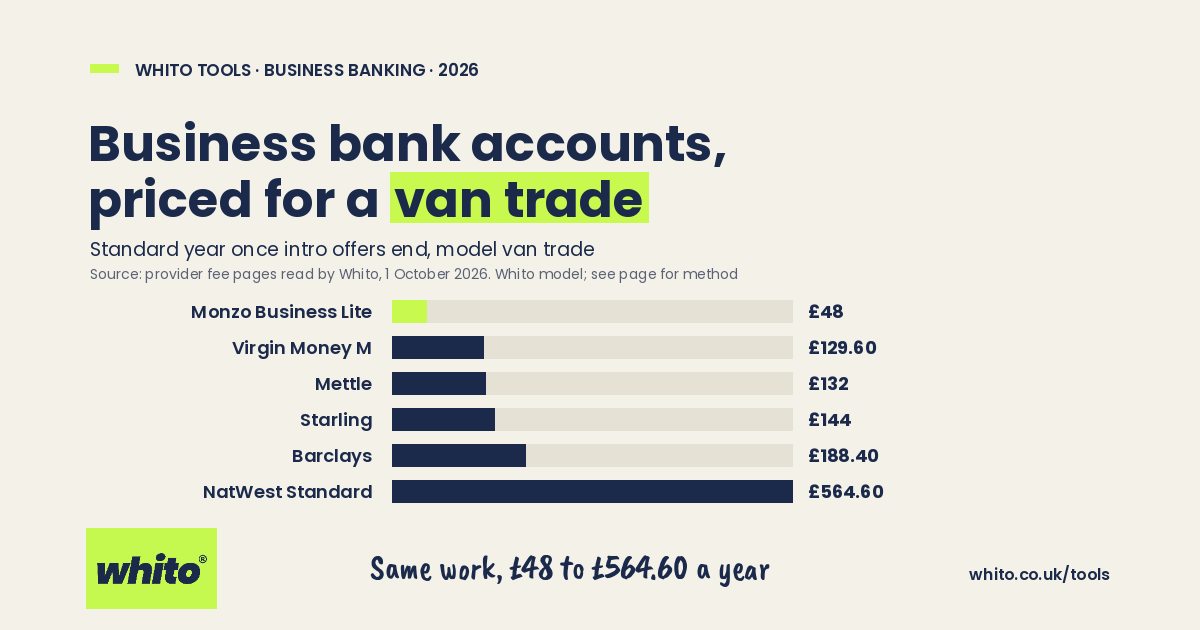
We read the published fee pages of 18 UK business account providers on 1 October 2026 and priced a standard year for three model businesses: an online sole trader, a van trade that takes some cash, and a café that takes a lot. For a van trade paying in £1,200 of cash a month, the yearly bill once introductory offers ended ran from £48 at Monzo Business Lite to £564.60 on NatWest’s Standard Tariff.
The quick verdict
You never touch cash
Take a bank with no monthly fee and no transfer fees. Starling, Monzo Business Lite and Mettle all cost £0 for our online sole trader, and all three offer bank accounts with FSCS cover. If you want a branch, the Virgin Money M Account (turnover under £1m), the Co-operative Bank Business Bank Account and the HSBC UK Small Business Banking Account also came to £0.
You take some cash
Monzo Business Lite charged £1 per deposit at a PayPoint or Post Office, the lowest cash price we read. Virgin Money (90p per £100) and Mettle (£2.75 a deposit) were next for our van trade.
You take a lot of cash
Check the limits before the price. Mettle caps cash at £23,000 a year, so it cannot serve our café at all. Revolut and Allica take no cash. Starling cost £420 a year at 0.7% a deposit, but Starling’s eligibility page puts business current accounts at £5,000 a day and £100,000 a year, its sole trader page gives £20,000 a year, and it lists businesses that regularly make significant cash deposits among those it does not take, so confirm yours first. (Corrected 1 October 2026: we first said no limited company limit was published.) Barclays cost £462.
You want a high street bank with lending
Of Barclays, HSBC UK, Lloyds and NatWest, HSBC cost nothing for our business without cash, and Barclays was cheapest once cash came in. HSBC’s cash charge is a percentage, which is what costs it the café.
Three model businesses
Fees only mean something against real activity, so we set three monthly patterns before reading any prices:
| Each month | A. Online sole trader | B. Van trade | C. Café or shop |
|---|---|---|---|
| Bank payments received | 8 (£4,000 in total) | 30 (£7,000) | 22 card settlements (£12,000) |
| Transfers sent | 6 | 15 | 25 |
| Direct Debits | 4 | 6 | 10 |
| Debit card purchases | 25 | 40 | 30 |
| Cash paid in | None | £1,200, in 4 deposits of £300 | £5,000, in 8 deposits of £625 |
What a standard year cost each business
This is the year after any free period ends. A new business can pay less in year one; we cover the offers on the free business bank accounts page.
| Account | A. Online sole trader | B. Van trade | C. Café or shop | What drives the bill |
|---|---|---|---|---|
| Monzo Business Lite | £0 | £48 | £96 | Bank. £1 per cash deposit at PayPoint or Post Office. Business cash limits not published on the fee page |
| Virgin Money M Account | £0 | £129.60 | £540 | Bank. Turnover under £1m only. Cash 90p per £100 |
| Mettle (NatWest) | £0 | £132 | Not modelled | Bank. £2.75 a deposit; cash capped at £500 a day and £23k a year, so C is not possible |
| Starling | £0 | £144 | £420 | Bank. Cash 0.7%, minimum £3 a deposit, Post Office only. Business cash limit £100,000 a year (sole trader page: £20,000) |
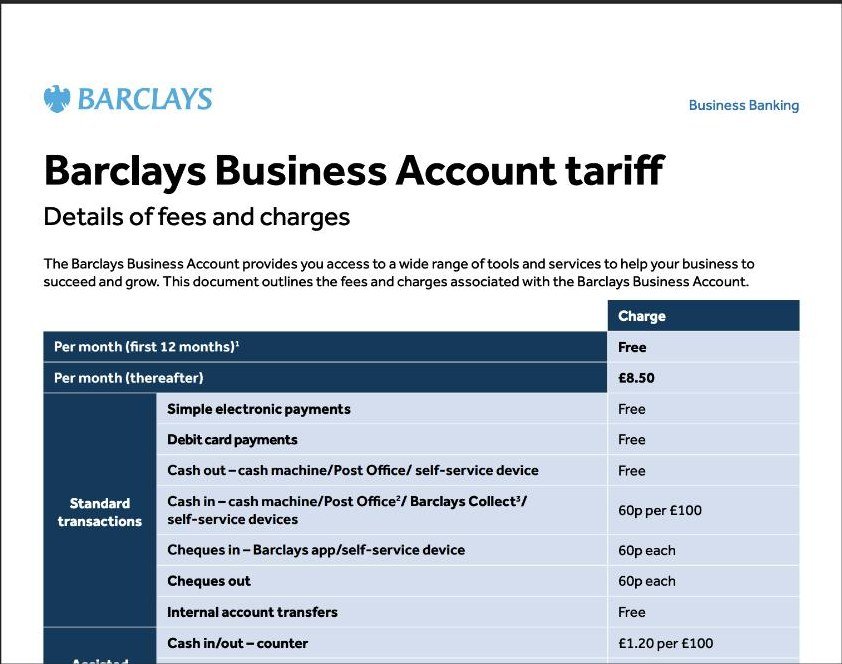
| Barclays | £102 | £188.40 | £462 | £8.50 a month after 12 free months. Cash 60p per £100 |
| Co-operative Bank | £0 | £216 | £900 | No monthly fee. Cash £1.50 per £100 |
| HSBC UK Small Business | £0 | £216 | £900 | No monthly fee. Post Office cash 1.5% (tariff from 14 December 2026) |
| Tide Free | £31.20 | £230.40 | £718.80 | 20p per transfer in or out after 5 a month. We counted Direct Debits you send at 20p, as Tide’s fee page lists them among billed payments; if they are free, A is £21.60 |
| Santander Classic | £119.88 | £299.88 | £869.88 | £9.99 a month after 12 free months (start-ups and switchers). Counter cash £1.25 per £100 |
| Tide Smart | £149.88 | £320.28 | £514.68 | £12.49 a month, 30 transfers included |
| Lloyds | £120 | £350.40 | £1,080 | £10 a month after 12 free months. Counter cash £1.60 per £100 |
| NatWest Standard Tariff | £180.60 | £564.60 | £1,026.60 | No monthly fee, £0.35 per automated item, cash 95p per £100 plus 95p per deposit. NatWest’s page says business debit cards are charged “0.35p” a use; we read this as its 35p item charge |
| Revolut Business Basic | £120 | Not modelled | Not modelled | £10 a month. Takes no cash |
| Countingup | £192.60 | Not modelled | Not modelled | £12 tier at £4,000 a month in. Cash fee not published |
| ANNA Free | £342 | Not modelled | Not modelled | E-money. 0.95% of money received above £1,000 a month |
Two banks are cheaper if you use their own machines. At a Lloyds deposit machine (85p per £100) the van trade would pay £242.40 and the café £630. Using Santander’s free £1,000 a month at its cash machines, the van trade would pay £149.88 and the café £719.88.
The model, every input and its source: download the CSV.
Business banking by trade
The best account depends on how your trade gets paid. We priced a model month for 14 trades with the same fees, and named the accounts that suit each one:
- Plumbers
- Electricians
- Roofers
- Builders
- Cleaning companies
- Pest control
- Beauty salons
- Hairdressers
- Vet practices
- Dental practices
- Accountants
- Law firms
- Letting agents
- Home care agencies
Accounts we read but could not fairly model
- Metro Bank: £8 a month unless you hold £6,000 all month; 30 free transactions only in months you hold it. Its tariff summary and its fee calculator gave different cash prices, so we left it out.
- TSB Business Plus: £5 a month after 30 free months, but only open to people who already bank with TSB. New customers are pointed to Santander.
- Allica Bank Business Rewards: for established businesses only (12 months trading plus £50,000 on deposit or an Allica loan), no cash or cheques, £25 a month if the average balance falls below £10,000.
- Zempler Bank (formerly Cashplus): Business Go is £0 a month with 3 free payments out, then 35p. Cash at the Post Office costs 0.55% with a £4 minimum. Its page did not say whether Direct Debits count as payments out.
- Virgin Money Business Current Account: 25 months free, then £6.50 a month and 30p per electronic item. The internet banking payment fee sits in a separate tariff we could not read.
Service: what customers said
The largest business current account providers in Great Britain must publish the results of an independent service quality survey, as a regulatory requirement. The August 2026 results asked about 1,200 customers of each of the 17 largest providers in Great Britain whether they would recommend their bank to other small businesses. Fieldwork ran from July 2025 to June 2026.
| Rank | Provider | Would recommend |
|---|---|---|
| 1 | Monzo | 85% |
| 2 | Starling Bank | 83% |
| 3 | Mettle | 82% |
| 4 | Handelsbanken | 78% |
| =5 | Tide | 69% |
| =5 | Zempler Bank | 69% |
| 8 | Virgin Money | 62% |
| =10 | Lloyds Bank | 60% |
| =13 | TSB | 56% |
| 16 | Bank of Scotland | 53% |
| 17 | Santander | 48% |
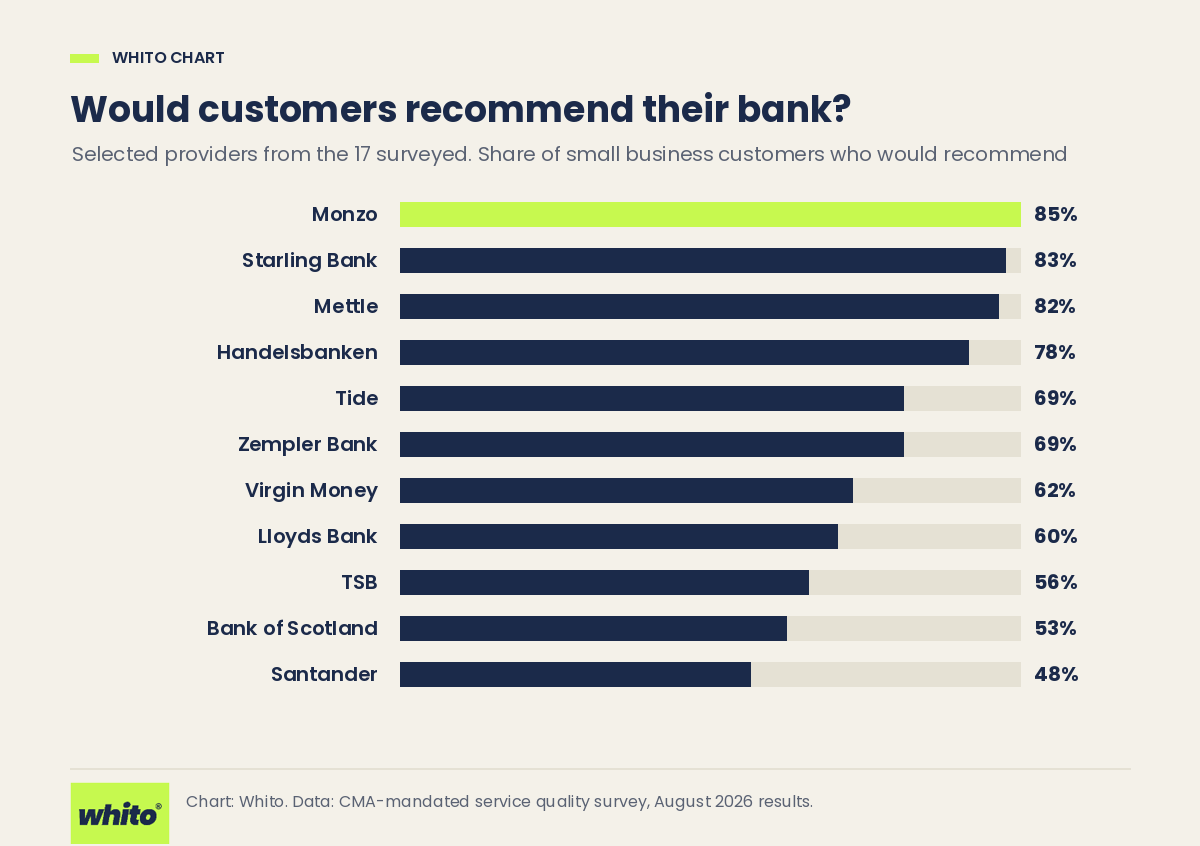
Monzo was both the cheapest account in our cash model and the most recommended. Starling and Mettle, second and third for service, were both in the four cheapest for our van trade.
The traps in the headline price
Free for a year, then the tariff
Barclays, Lloyds and Santander were free for the first 12 months for eligible new customers, then £8.50, £10 and £9.99 a month. NatWest’s start-up offer runs two years, then moves to its Standard Tariff: no monthly fee, but 35p on every electronic payment in or out, every Direct Debit and every card payment. Our van trade makes 91 of those a month.
Cash is where the gap opens
With no cash, eleven of the fifteen modelled accounts cost under £125 a year. With £5,000 of cash a month, the eleven that could take it ranged from £96 to £1,080. See paying cash into a business account for the price of paying in £1,000 at each.
Free plans that charge on what comes in
ANNA’s free plan takes 0.95% of money received above £1,000 a month. Tide’s free plan charges 20p on transfers in as well as out once you pass five. Countingup counts payments in towards its three free transactions.
Not every account is a bank
An e-money account is safeguarded, and the FSCS does not cover it. Read FSCS protection on business accounts before you hold a large balance anywhere.
Picking by stage
Start
Open a no-fee account in the business’s name the day you start trading, and keep personal spending out of it. Your accountant’s bill falls when the statements are clean. Connect it to your bookkeeping: Starling lists Xero, QuickBooks and FreeAgent connections, Tide includes a Xero connector on its paid plans, and NatWest and Mettle customers get FreeAgent free (our FreeAgent review has the conditions).
Build
Once cash, card takings and staff payments arrive, re-run this sum with your own numbers. Your card provider’s fees usually matter more than the bank’s; see payment processors compared.
Scale
Lending, multiple users and a named contact start to matter more than a few pounds of fees. Ask for the tariff in writing and compare the standard year.
If your bank no longer fits, switching business bank account takes seven working days.
Count your payments in, payments out and cash for one month, then price a standard year. The cheapest account for a café can be the dearest for a consultant, and the other way round.
The rest of the banking section: how to open a business bank account, using a personal account for business, business savings rates, business credit cards, international payments and charity bank accounts.
Questions
What is the cheapest business bank account in the UK?
On 1 October 2026, for a business that never handles cash, Starling, Monzo Business Lite, Mettle, the Virgin Money M Account, the Co-operative Bank Business Bank Account and the HSBC UK Small Business Banking Account all came to £0 a year in our model. Once cash is paid in, Monzo was cheapest: £1 a deposit, so £48 a year for our van trade and £96 for our café.
Which business bank has the best customer service?
In the independent service quality survey published in August 2026, Monzo ranked first for overall service quality (85% of customers would recommend it to other small businesses), Starling second (83%) and Mettle third (82%). Santander was last of the 17 providers at 48%.
Do I need a business bank account as a limited company?
Yes in practice. Gov.uk guidance on company and accounting records says a company’s banking must be separate from your personal banking, and that the simplest way to keep the money separate is to open a business bank account.
Are app-only business accounts protected by the FSCS?
Starling and Monzo are banks, and Mettle bank accounts are provided by NatWest, so eligible deposits are covered up to £120,000. Mettle also mentions an e-money account provided by PPS, which is not covered, so check which you hold. Tide current accounts sit with ClearBank and are covered. ANNA’s main account is e-money, which is safeguarded rather than FSCS protected. Revolut Business accounts are being moved from e-money to Revolut Bank UK and are covered once moved.
Is a free business bank account really free?
Not always. In our model ANNA’s free plan cost an online sole trader £342 a year, because it takes 0.95% of money received above £1,000 a month, and Tide’s free plan cost £31.20 in transfer fees. Several high street accounts are free for 12 to 31 months only.