
Last Updated on October 1, 2026
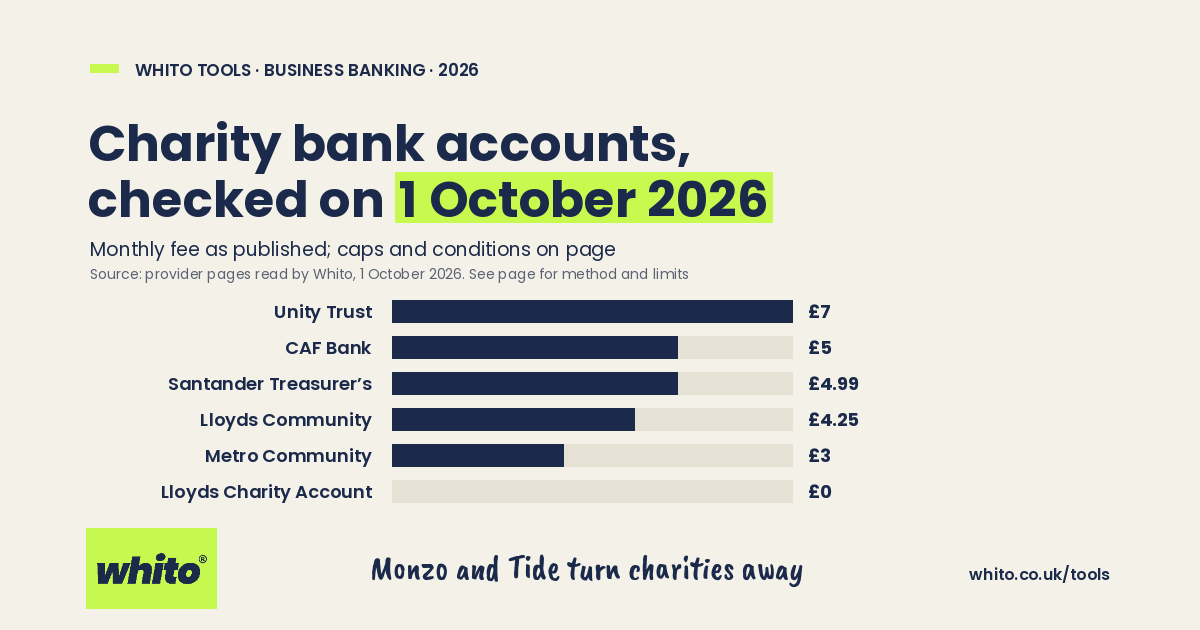
A treasurer looking for a charity bank account meets two surprises: half the app banks will not open the account at all, and the free high street accounts hide their conditions in the income caps.
We checked 14 providers’ charity and community account pages on 1 October 2026. Of 14 providers we checked on 1 October 2026, Monzo and Tide turn charities away, Metro Bank’s Community Account costs £3 a month, and NatWest’s free Community account needs turnover under £100,000.
The accounts, read on 1 October 2026
| Provider | Account | Monthly fee | Who it is for |
|---|---|---|---|
| Lloyds | Charity Account / Community Account | £0 / £4.25 | Registered charities under £250,000 income; clubs, societies and PTAs under £250,000 |
| NatWest | Community Bank Account | £0 with turnover under £100,000 | Charities, clubs, religious organisations, trusts; existing NatWest customers |
| Barclays | Charity Impact Account | £0 | Registered, excepted or federated charities and CICs, turnover under £100,000, up to three officials |
| Co-operative Bank | Charity and Community Bank Account | £0 | Registered charities, co-operatives, community benefit societies, credit unions, CICs |
| HSBC | Charitable Bank Account | £0 | Not-for-profits with a charitable purpose; online applications up to £6.5m turnover |
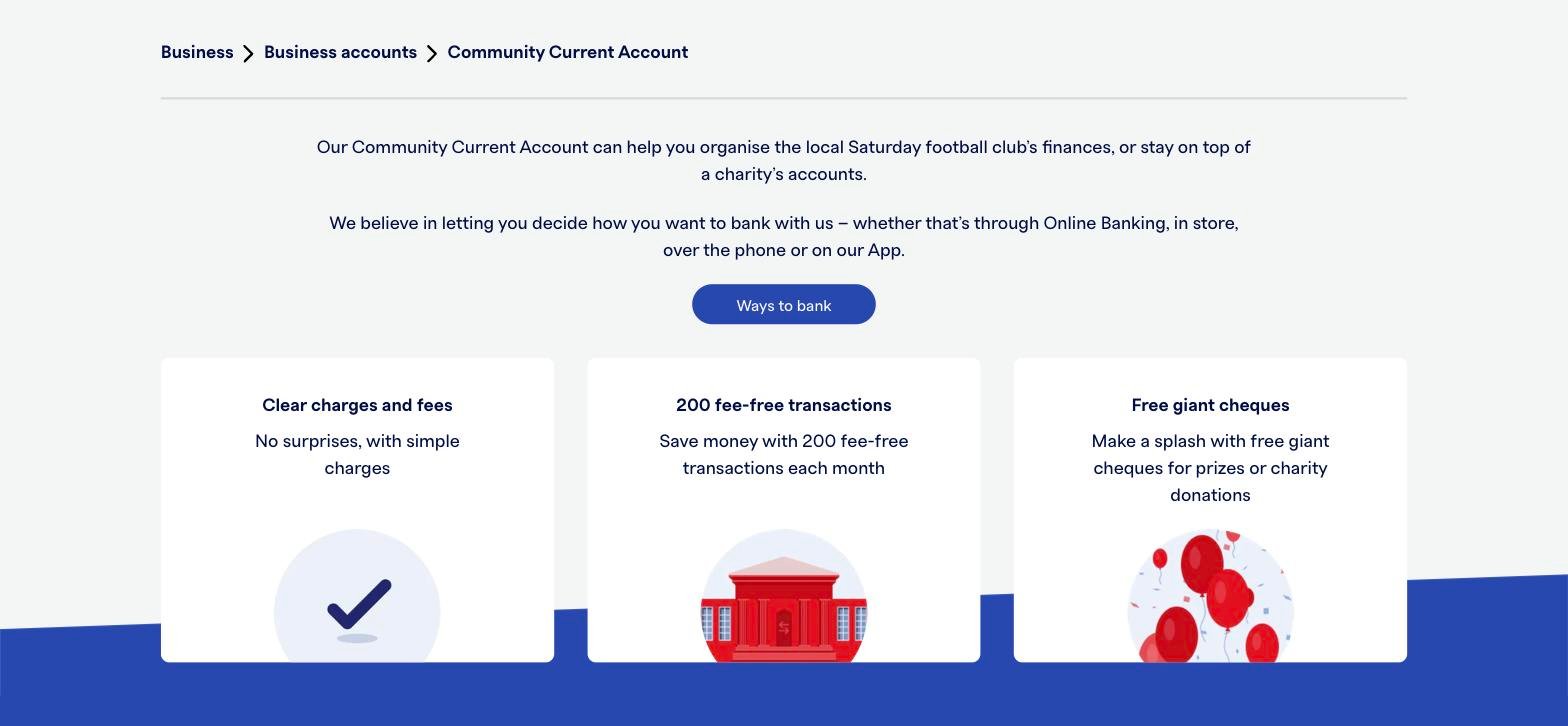
| Metro Bank | Community Current Account | £3 | Clubs, societies and charities under £250,000; 200 free transactions a month, cash free to £10,000 a month |
| Santander | Treasurer’s Current Account | £4.99; £0 for registered charities | Clubs, societies and charities under £250,000; currently existing Santander customers only |
| Virgin Money | Clubs and Societies / Charity Choice | Not stated as a monthly fee | Clubs making up to ten transactions a month; registered charities |
| Unity Trust Bank | Business Current Account | £7 | Charities, unions, councils and socially minded businesses; unregistered charities must call first |
| CAF Bank | CAF Cash Account | £5 | Organisations registered with a UK charity regulator, CICs, CASCs and exempt charities |
| Starling | Business account | £0 | Registered charities set up as limited companies only |
| Zempler | Business Go | £0 | Accepts applications from charities |
| Monzo | None | No account offered | Its ineligibility list includes charities, CICs and non-registered organisations |
| Tide | None | No account offered | Excludes charities and CICs |
The caps do the work the fee does not
Free comes with caps: £100,000 of turnover at NatWest and Barclays, £250,000 at Lloyds. The paid accounts carry caps too, at £250,000 for Metro and Santander. A charity that grows past the cap gets moved to a standard business tariff, so the treasurer’s job is to know the cap as well as the fee. Santander’s Treasurer’s account is closed to organisations that do not already bank there, and NatWest’s free banking is for organisations that already bank with it.
Cash from events is where charities pay
A summer fete banks more cash in a weekend than a plumber banks in a month. Lloyds charges 75p per £100 on these accounts, HSBC 0.4% rising to 0.6% from 14 December 2026, and the Co-operative Bank caps free cash at £100,000 a year. Metro’s £3 account with cash free to £10,000 a month is priced for exactly this pattern.
Structure decides who will have you
An unincorporated association is the hardest structure to bank: the app banks mostly decline it, Starling takes charities only as limited companies, and Unity Trust asks unregistered charities to call first. A charitable company or CIO has the full table to choose from. Signatory rules matter too: Barclays allows up to three officials, Metro three operators, and dual authorisation is worth asking every provider about before you apply.
Pick by cap, cash and signatories, in that order, and read the FSCS position the same way a business would: eligible deposits are covered to £120,000 per licence, and our FSCS protection on business accounts page explains which brands share one. For the trading arm of a charity, the ordinary tables on best business bank accounts UK apply.
Questions
Which banks offer free charity bank accounts?
On the pages we read on 1 October 2026: Lloyds’s Charity Account (income under £250,000), NatWest’s Community account (turnover under £100,000, existing customers), Barclays’s Charity Impact Account (turnover under £100,000), the Co-operative Bank’s Charity and Community account, and HSBC’s Charitable Bank Account all showed no monthly fee.
Can a charity open an account with Monzo or Tide?
No. Monzo’s ineligibility list includes charities, community interest companies and non-registered organisations, and Tide excludes charities and CICs. Starling supports registered charities only when they are set up as limited companies. Zempler accepts charity applications.
What bank account suits a small club or society?
The club accounts are Lloyds’s Community Account (£4.25 a month, under £250,000), Metro’s Community Current Account (£3 a month, 200 free transactions, cash free to £10,000 a month) and Virgin Money’s Clubs and Societies Account, which suits groups making up to ten transactions a month.
Do charity accounts charge for cash?
Often. Lloyds charges 75p per £100 on its charity and community accounts, HSBC charges 0.4% rising to 0.6% from 14 December 2026, and Metro gives the first £10,000 a month free. If your group banks cash from events, this line matters more than the monthly fee.