
Last Updated on October 28, 2026
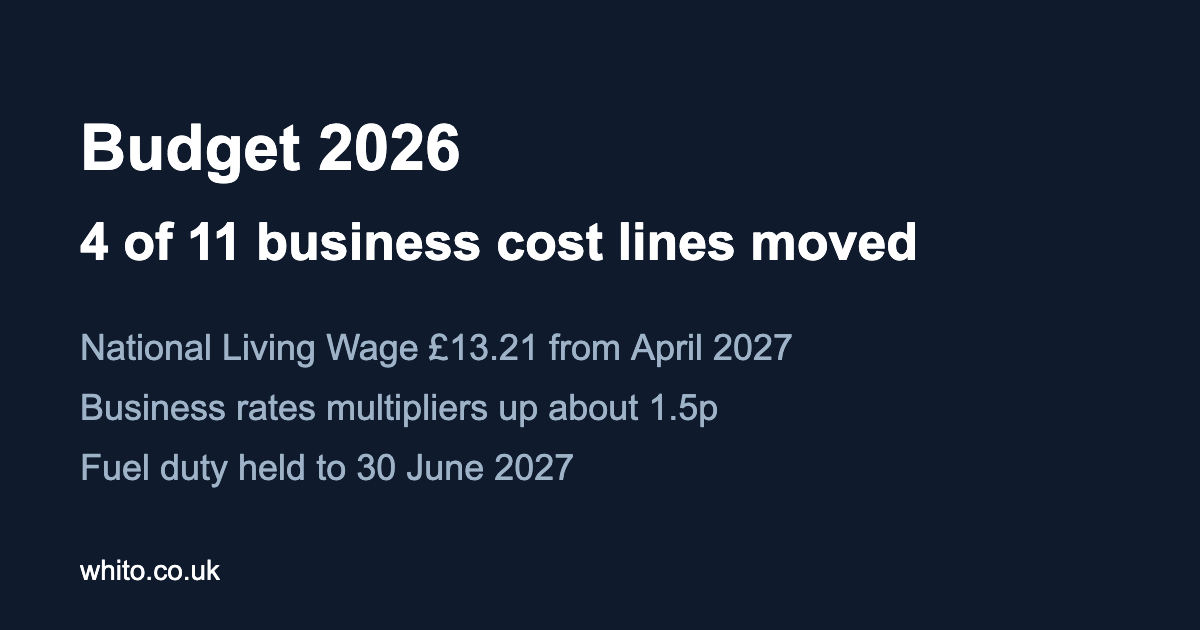
The Budget on 28 October 2026 moved four of the eleven business cost lines Whito tracks. Most of the changes start in April 2027, so there are five months to plan. We checked every figure below against the Budget document and HMRC’s rates tables published the same day. Our live blog has each change in full, with the working.
What moved
Staff costs. The National Living Wage for workers aged 21 and over rises from £12.71 to £13.21 an hour on 1 April 2027. The Budget papers put that at £910 a year more for a full-time worker. Add employer National Insurance at 15% and the cost is about £1,050 a year per full-time worker.
Business rates in England. Every multiplier rises from 1 April 2027. The small business multiplier goes from 43.2p to 44.7p, so an office with a rateable value of £20,000 pays about £300 more a year. Small retail, hospitality and leisure properties do better: full Small Business Rate Relief now reaches a rateable value of £18,000, tapering to £21,000, and their bill rises are capped at inflation for two years.
Fuel duty. The 5p a litre cut stays until 30 June 2027, with petrol and diesel held at 52.95p a litre. From 1 July 2027 the rate is 60.59p. A van using 2,000 litres a year pays about £153 more a year after that date.
Making Tax Digital. Sole traders and landlords joining Making Tax Digital for Income Tax in April 2027 will not get penalty points for late quarterly updates in their first year. The Budget document does not mention a change to the £30,000 income threshold for April 2027.
What did not move
Employer National Insurance stays at 15% above £96 a week. The Employment Allowance stays at £10,500. VAT stays at 20%, with the registration threshold at £90,000. Corporation Tax stays at 19% up to £50,000 of profit and 25% above £250,000. Dividend tax, the £500 dividend allowance, the 2% Digital Services Tax, full expensing and the £1 million Annual Investment Allowance are all unchanged for 2027-28.
Five smaller changes owners should know
First, from April 2027, UK businesses that are not VAT-registered may be charged 20% VAT by overseas suppliers of services such as software or advertising. The reverse charge will only apply to VAT-registered buyers. A business spending £500 a month on such services could pay up to £1,200 more a year.
Second, the lifetime limit on Business Asset Disposal Relief falls from £1 million to £500,000 for sales from 6 April 2027. On a £1 million gain that means about £30,000 more Capital Gains Tax.
Third, income tax on property and savings income rises by 2 points at each band from April 2027. A basic-rate landlord with £10,000 of rental profit pays about £400 more.
Fourth, the Trading Allowance rises from £1,000 to £3,000 a year from April 2027. Fifth, the 55p a mile tax-free rate for the first 10,000 business miles, in place temporarily since May, is made permanent, and the rate above 10,000 miles rises from 25p to 35p from 6 April 2027. Sixth, from October 2027 online marketplaces will collect VAT on sales by UK sellers that are VAT-registered or sell more than £90,000 a year on that platform.
What to do this week
Check three numbers: your wage bill from April 2027, your rateable value and reliefs, and any services you buy from overseas if you are not VAT-registered. Then put the April changes into your cash flow forecast for 2027-28. The calculator on our live blog shows what the confirmed changes do to a typical small business.
Updated 28 October 2026, 15:41: the mileage line has been corrected (the 55p rate was already in place on a temporary basis) and the online marketplace VAT change added.
Sources: Budget 2026, HM Treasury and Budget 2026 overview of tax legislation and rates, Annex A, HMRC, both published 28 October 2026. This article explains what was announced and is not tax advice.