Finding
Electrician leads on MyBuilder cost roughly £15 to £40 each, while Checkatrade charges a fixed membership of roughly £60 a month at the basic end and £120 to £180 in competitive areas, according to Whito's July 2026 comparison of published UK lead platform pricing.
Source: Whito, whito.co.uk/electricians/research/electrician-leads-cost-uk, July 2026. Free to quote with a link to this page.
Last Updated on September 17, 2026
Ask an electrician what a lead costs and you usually get a shrug. The platforms do not make it simple, and the honest answer depends on how you pay. So we gathered the published 2026 pricing from the main UK lead sites and put it side by side. Then we did the part that actually matters, which almost nobody does.
The mistake: comparing the sticker price
Most electricians compare lead sites on one number. A membership fee. A price per lead. Whichever looks cheapest wins.
That is the wrong number. A £15 lead is not cheaper than a £30 lead if you win one in twenty of the first and one in three of the second. What a lead costs is not what you should be measuring. What a won job costs is.
What the platforms actually charge
Here is the published 2026 pricing, grouped by how you pay.
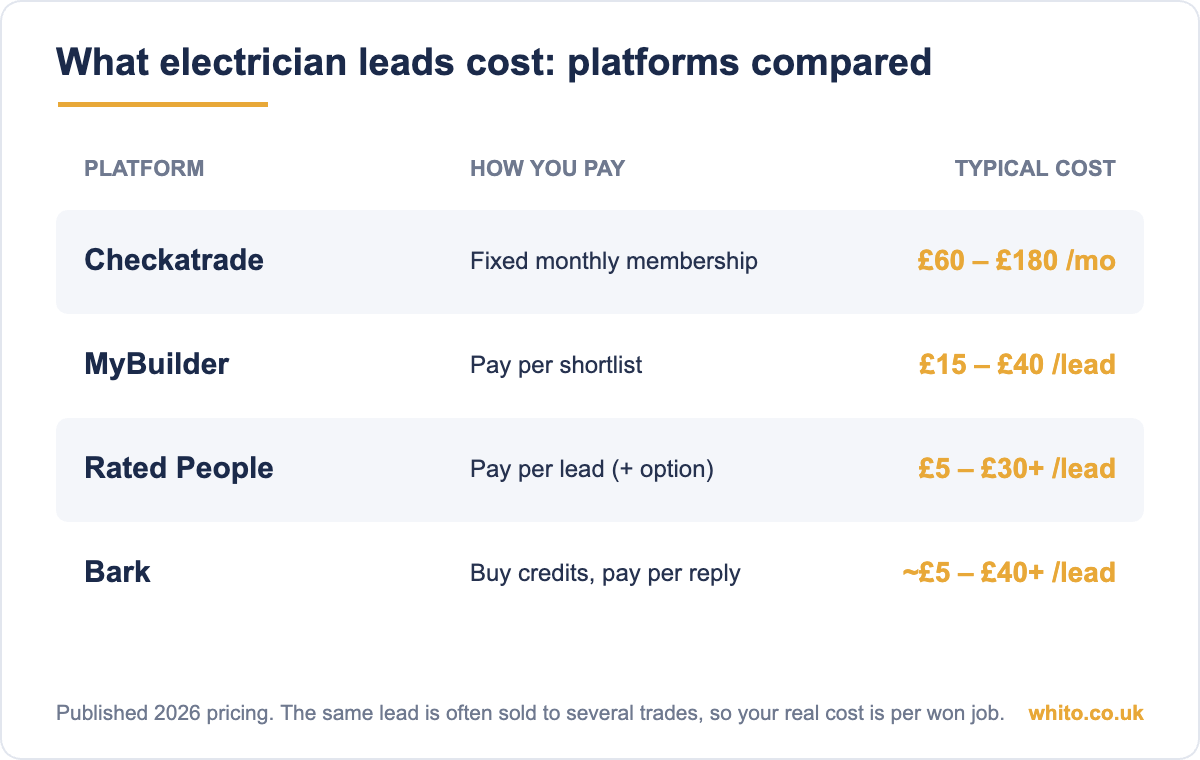
Checkatrade. A fixed monthly membership, roughly £60 a month at the basic end and £120 to £180 in competitive areas. Some plans add a per lead fee on top, around £5 to £40 depending on the job size. The catch is that the membership is fixed. You pay it in a quiet month with no work just the same as in a busy one.
MyBuilder. You pay per shortlist, roughly £15 to £40 a lead, and only when a homeowner picks you to quote. No standing fee, but you are paying for the chance to quote, not for the job.
Rated People. Pay per lead, roughly £5 to £10 for a small job like an EICR and £20 to £30 or more for a big one like a rewire or an EV charger install. There is an optional subscription, around £40 a month, that discounts the lead prices.
Bark. You buy credits and spend them each time you respond to a lead. The credit price varies, and a single lead can cost anywhere from a few pounds to £40 or more depending on the job value. The same enquiry is sold to several tradespeople.
For an electrician the pattern holds across all of them. A small job like an EICR or a socket sits at the cheap end. A consumer unit, a rewire or an EV charger install sits at the expensive end.
The number that actually matters
Here is the sum the platforms will never show you.
Cost per won job = cost per lead divided by the share of leads you actually win.
Pay £20 a lead and win one in five, and each job cost you £100 in lead fees. Win one in ten and it cost you £200. Same lead price. Double the cost per job.
Two things quietly push that number up. On the pay per lead sites, the same enquiry is often sold to three, four or five trades, so your win rate is lower than it feels. On the membership sites, a slow month does not reduce the fee, so your cost per job balloons exactly when you can least afford it.
So which is cheapest?
There is no single answer, and that is the honest finding. It depends entirely on two things: how many jobs you win, and how fast and well you respond.
A busy electrician who replies within the hour and converts well can make almost any of these platforms pay. A slow one who lets enquiries go cold will lose money on all of them, membership or pay per lead. The platform is not the variable that decides it. You are.
The sharp takeaway
Do not pick a lead platform on its headline price. Work out your likely cost per won job on each, using your real win rate, then decide. And before you spend a penny more on leads, fix the thing that sets that win rate: how fast you reply, how clearly you quote, and whether people can trust you before they call.
Figures in this study are typical published 2026 pricing from Checkatrade, MyBuilder, Rated People and Bark, gathered from public sources. Pricing changes and varies by area and plan, so confirm current rates with each platform.
Whito verifies UK electricians so customers can trust you before they call, which is what lifts your win rate. Claim your free listing to get found and trusted.
Related on Whito
- The leads trap: why buying more leads keeps you small
- UK trade directory costs in 2026
- Start, Build, Scale: marketing for electricians
The leads trap: why buying more is not the fix
We should be straight with you, because most people writing about leads have something to sell you. Whito does run a leads product. Which is exactly why we can tell you the part the lead sites never will.
More leads will not fix a business that does not convert. It will just make the leak bigger and faster.
The mistake: treating leads as the answer
Work goes quiet. The obvious move is to buy more leads. Sign up to another platform, top up the credits, wait for the phone to ring.
For a week or two it feels like progress. Then the same problem comes back, because the problem was never the number of leads. It was what happened after each one arrived.
Buying leads to fix a slow month is like turning the tap up on a blocked sink. You are adding pressure to a system that cannot cope with the flow it already has.
The maths nobody shows you
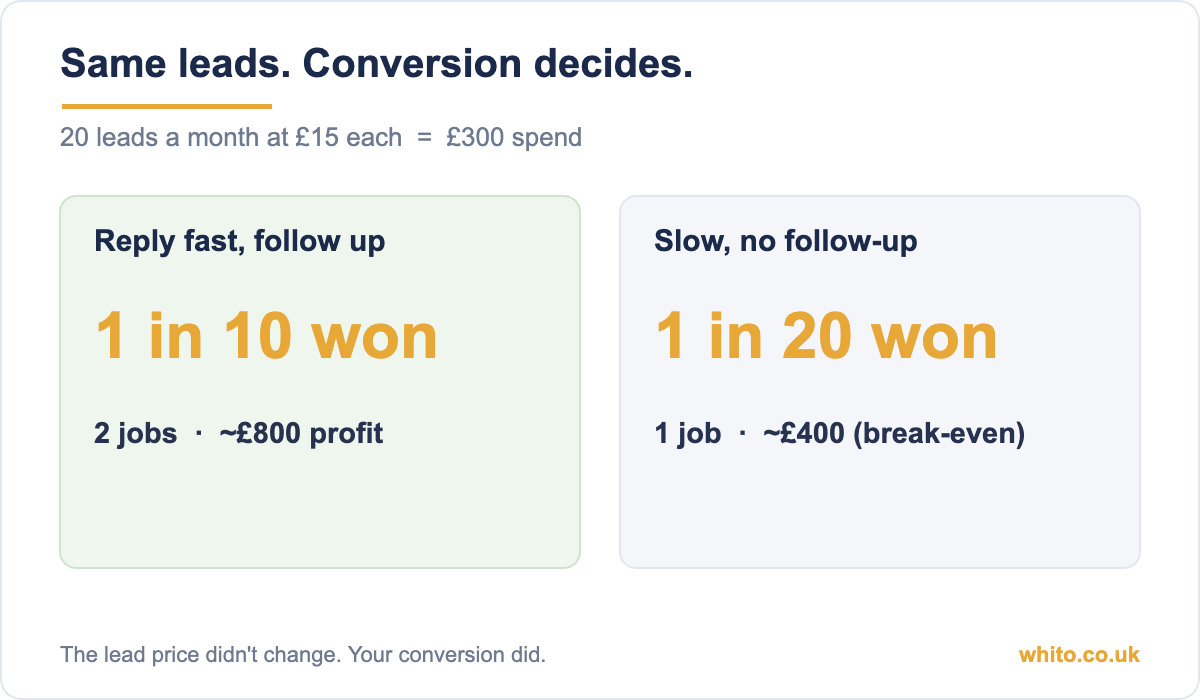
Say a lead costs you £15. You quote 20 leads a month, so £300.
If you win one in ten, you land two jobs. If those jobs average £400 of profit, you made £800 on £300 of leads. That works.
Now change one number. You are slow to call back, so you win one in twenty. Same £300, but now one job, £400 profit. You have almost broken even, and you feel like leads do not work.
The lead price did not change. Your conversion did. That single number, how many enquiries you turn into paid jobs, decides whether leads make you rich or drain you dry. Almost nobody measures it.
Why you are losing the leads you already pay for
Three leaks account for most of it, and none of them are about buying more.
You call back too slowly. The customer with a dead consumer unit is messaging five electricians. The first to respond usually wins, often before the others even see the enquiry. If you reply that evening, you have already lost half your leads to someone faster.
You quote like everyone else. A number in a text message, no reassurance, no certificate mentioned, no sign you can be trusted. When every quote looks the same, people pick the cheapest, and racing to the bottom is not a business.
You never follow up. Most jobs are not won on the first message. The customer goes quiet, you assume it is a no, you move on. One polite follow up two days later wins work that you have already paid the lead fee for.
Fix those three and your existing leads are worth double. No extra spend.
The reframe: leads are fuel, not an engine
A lead is fuel. Fuel is useless without an engine that turns it into movement.
Your engine is the boring stuff. How fast you reply. How clearly you quote. Whether people can check that you are real and qualified before they let you into their home. Whether you follow up. Whether they trust you enough to say yes at a fair price rather than haggle you down.
Build that engine and every lead goes further. Skip it and you can pour money into leads forever and stay exactly the same size, wondering why the platforms never delivered.
This is the whole of Whito’s thinking in one trade. Structure before scale. Fix what happens after the lead before you spend more getting them.
What to do before you buy another lead
Work out your conversion rate. Of your last twenty enquiries, how many became paid jobs? If you do not know, that is the first problem.
Commit to replying to every enquiry within the hour during working time. This one change beats most marketing.
Make your quote reassuring, not just a price. Name the certificate, confirm what is included, remind them you are verified and qualified.
Follow up once, politely, on anything that goes quiet.
Only then turn the leads up. Now you are adding fuel to an engine that works, and the numbers stack in your favour.
The sharp takeaway
Leads are not the problem and they are not the solution. Your conversion is both.
Buy leads once you can prove you turn enquiries into jobs. Until then, more leads just means more money spent proving your business is not ready. Fix the engine first, then add the fuel.
Whito verifies UK electricians so customers can trust you before they call, which is half the conversion battle won. Claim your free listing, and when you are ready to add fuel to a working engine, our leads come from people who already chose to trust a verified business.
Related on Whito
If your business is named here and you think we have a fact wrong, email hello@whito.co.uk and we will check it and correct it. If you want to respond, send us a statement and we will publish it alongside. Full detail: Corrections, right of reply and removals.