
Last Updated on September 8, 2026

The QR code on your counter. The tablet at the front desk. The “leave us a five star review and get 10 percent off” card. Through 2026, Google has rewritten the rules on all of it, and most businesses have not noticed.
Reviews are still one of the most valuable things a local business owns. That is exactly why it is worth getting this right. Break the new rules and you risk reviews being stripped, or worse, your whole profile flagged.
What Google changed
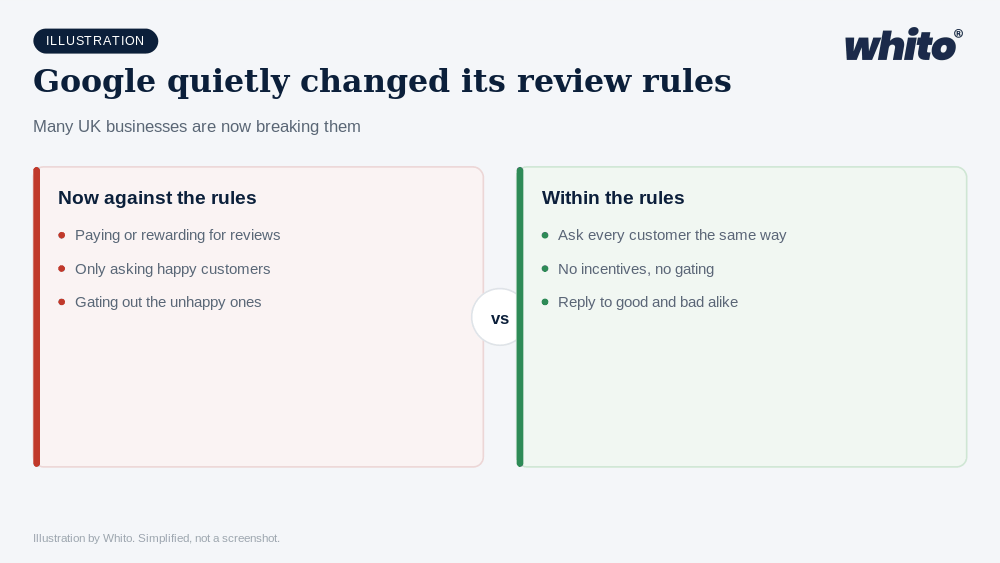
Three things tightened up this year, and they catch tactics plenty of honest businesses use.
Incentives are out. Offering a discount, a freebie, loyalty points or any reward in exchange for a review is no longer allowed. That includes offering something to get a customer to change or take down a bad review.
On the premises asks are out. As of 20 February 2026, Google says you should not require or pressure people to leave a review while they are still with you. The front desk tablet, the “scan before you go” QR code, the phone handed over in the driveway, all now count as pressure.
Scripted name drops are out. You can no longer instruct customers to mention a staff member by name. If a happy customer names your technician on their own, that is fine. Telling them to do it is not.
Why this trips up good businesses
None of this is aimed at you specifically. It is aimed at fake and bought reviews. But the net is wide, and a lot of legitimate businesses have been running exactly these tactics for years because someone once told them it worked.
The problem is simple. If your review strategy depends on bribing people or cornering them at the till, it was never built on solid ground. When the rules shift, tactics like that are the first to fall over.
| Old tactic | Status now | Do this instead |
|---|---|---|
| Discount or freebie for a review | Banned | Ask sincerely, with no reward attached |
| Tablet or QR code at the counter | Banned | Follow up by email or text after they leave |
| Telling customers to name staff | Banned | Let natural mentions happen on their own |
| Paying to remove a bad review | Banned | Reply calmly in public and fix the issue |
What to do instead
The compliant way is also the better way. It just takes a little structure.
Ask after the moment, not during it. Send a simple, friendly request once the customer has gone home and had time to judge the work. A short email or text with a direct link does the job, and it is fully within the rules. If you do not have a tidy way to capture customer details and follow up, our roundup of the best email marketing platforms for UK businesses is a good starting point.
Make the ask part of your process. A reliable trickle of genuine reviews beats a burst of incentivised ones that might get wiped. Track who to ask and when. A basic CRM system turns this from a scramble into a habit.
Remember why reviews matter. They feed local search, and local search is still where most nearby customers find you. We pulled the numbers together in our UK local search data report.
The takeaway
Google did not ban reviews. It banned the shortcuts. If your reviews come from doing good work and asking honestly, nothing here hurts you. If they came from discounts and counter top tablets, now is the moment to fix the foundation before it costs you.