Last Updated on October 1, 2026
An independent vet practice turns over enough, employs enough people and has enough partners or directors that the cheapest app account is rarely the right one. Access, approvals and limits come first.
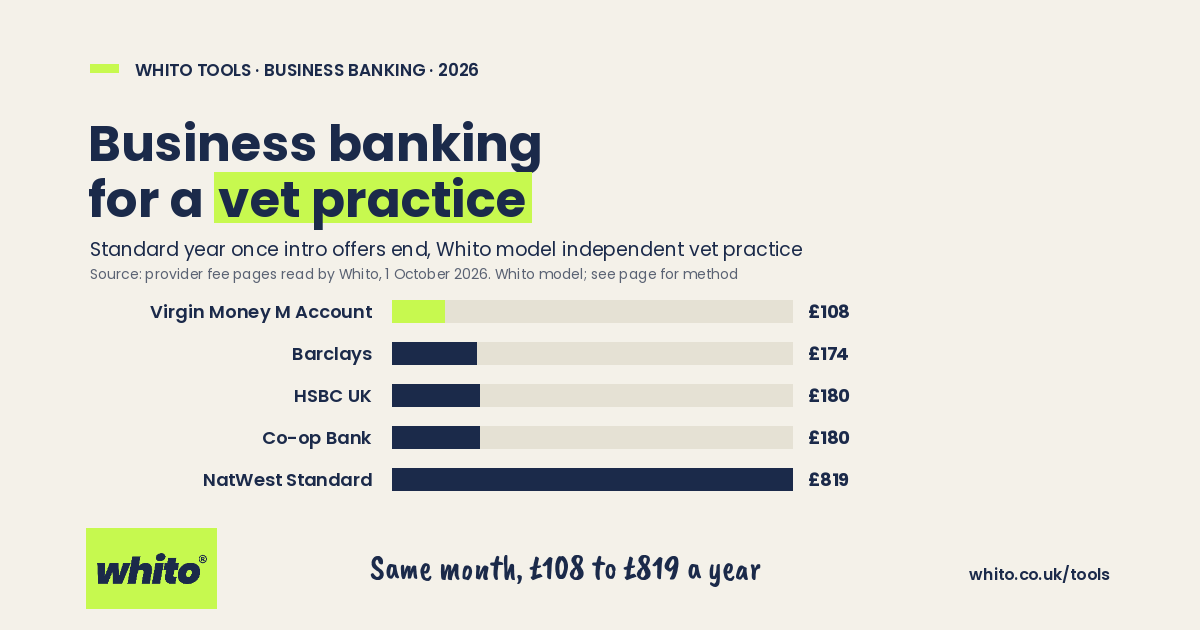
We priced a standard year at 15 UK business accounts on 1 October 2026 for an independent practice with three directors, 15 staff, £45,000 a month received and £1,000 in cash. For our model independent vet practice, a standard year of banking cost £108 at Virgin Money M Account and £819 at NatWest Standard Tariff.
The accounts that suit veterinary practices
- Virgin Money M Account, £108 a year. No monthly fee, free electronic payments and a branch. For turnover under £1m.
- Barclays Business Current Account, £174 a year. £8.50 a month after 12 free months; cash 60p per £100.
- HSBC UK Small Business Banking, £180 a year. No monthly fee and free digital payments, with relationship lending for equipment and premises.
Virgin Money’s M Account only suits a practice turning over less than £1m a year; our model practice takes £540,000. Above that, look at the other accounts in the table.
The model month
| Each month | Independent vet practice, 15 staff (limited company) |
|---|---|
| Payments received | 52 (£45,000 in total) |
| Transfers sent | 60 (including 15 staff payments) |
| Direct Debits | 15 |
| Debit card purchases | 30 |
| Cash paid in | £1,000, in 4 deposits of £250 |
What a standard year cost an independent veterinary practice
| Account | Standard year | What drives the bill |
|---|---|---|
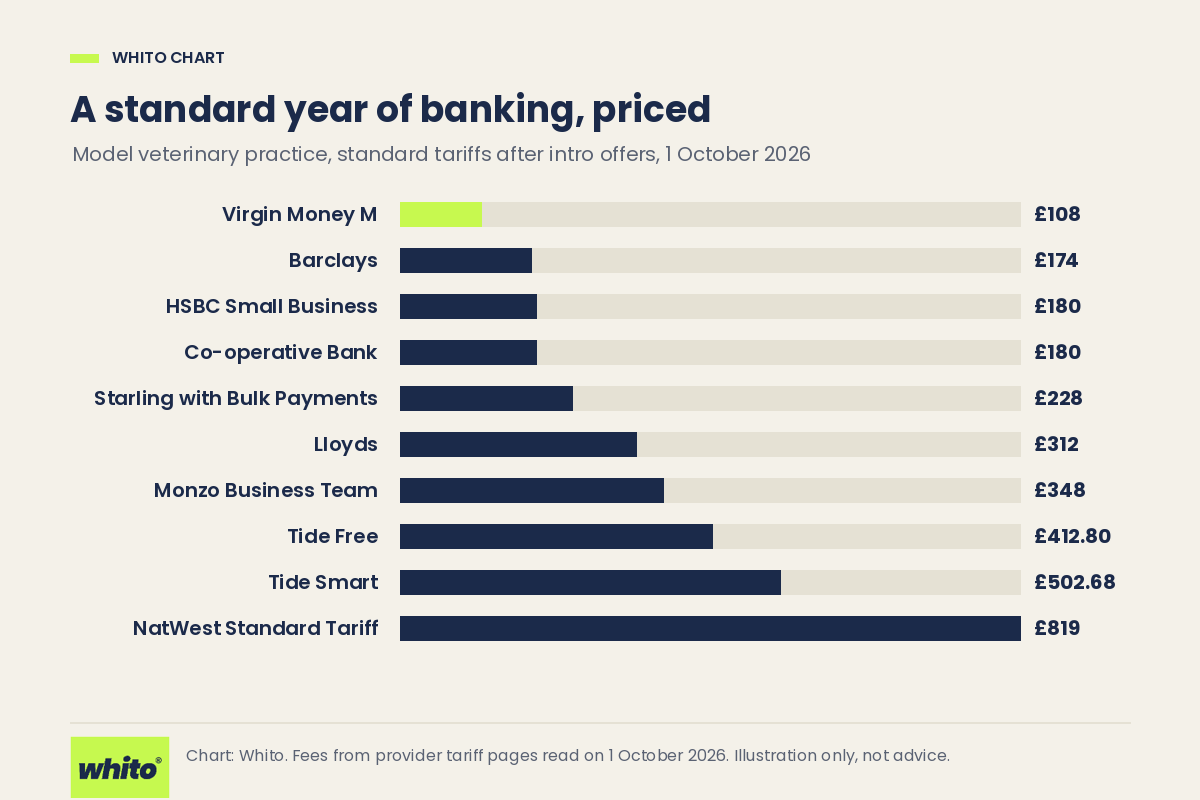
| Virgin Money M Account | £108 | Cash 90p per £100; turnover under £1m |
| Barclays Business Current Account | £174 | £8.50 a month after 12 free months; cash 60p per £100 |
| HSBC UK Small Business Banking | £180 | Post Office cash 1.5% (tariff from 14 December 2026) |
| Co-operative Bank Business Bank Account | £180 | Cash £1.50 per £100 |
| Starling with Bulk Payments | £228 | Bulk Payments add-on £7 a month (limited companies); cash 0.7%, minimum £3 |
| Lloyds Business Account | £312 | £10 a month after 12 free months; counter cash £1.60 per £100 |
| Monzo Business Team | £348 | £25 a month Team plan (staff access, bulk payments) plus £1 per cash deposit |
| Tide Free | £412.80 | 20p per transfer in or out after 5 a month |
| Tide Smart | £502.68 | £12.49 a month, 30 transfers included |
| NatWest Standard Tariff | £819 | 35p per electronic item and card payment; cash 95p per £100 plus 95p a deposit |
Left out for this trade, and why:
| Account | Why it is not in the table |
|---|---|
| Mettle (NatWest) | Only one owner can access the account |
| Santander Business Classic | Maximum two directors, owners or partners |
| Revolut Business Basic | Takes no cash |
| Countingup | Cash fee not published |
| ANNA Free | Cash fee not on its pricing page |
What matters for veterinary practices beyond the fee
Card and insurance income
Most income arrives as card settlements and pet insurance payments. Neither is charged by the accounts at the top of our table; NatWest’s Standard Tariff charges 35p on each.
Payroll and approvals
Paying staff one by one costs time, and on per-transfer plans it costs money. Starling sells Bulk Payments for limited companies at £7 a month; Monzo’s Team plan (£25 a month) includes bulk payments of up to 200 at once; ANNA puts bulk payments on its Business plan. Mettle lets only one owner into the account. For a practice, also check whether payments can require two people to approve them.
Borrowing
Equipment and premises finance is where a relationship bank earns its fee. If you expect to borrow, price the account and the lending together.
Before you open
- List who needs access and who must approve payments.
- Check turnover and balance limits: Virgin Money’s M Account is for turnover under £1m, and Metro Bank’s account for up to £2m.
- Price your own month: count a month of payments in, payments out, Direct Debits and cash, then use the fees on our best business bank accounts UK page.
- Check protection: who holds the money and whether it shares an FSCS limit. See FSCS protection on business accounts.
More for veterinary practices: the vet hub and vet software and tools. Every trade we priced: business banking by trade.
A practice should filter on access and approvals first, then compare fees among what is left.
Questions
What is the best business bank account for veterinary practices?
In our model of an independent veterinary practice, priced from published fees on 1 October 2026, the cheapest standard year was Virgin Money M Account at £108, then Barclays Business Current Account at £174 and HSBC UK Small Business Banking at £180. The cheapest high street bank was Virgin Money M Account at £108. Your own mix of payments and cash decides the answer.
What bank account is best for a veterinary practice?
It depends on users and borrowing more than fees. In our model, Monzo’s Team plan cost £348 a year including the £25 monthly fee, Starling £228 and HSBC UK £180. Accounts that charge per payment cost far more: NatWest’s Standard Tariff came to £819.