
Last Updated on October 1, 2026
An accountant’s own business account is easy. The client bank account is not, and that rules out some of the cheapest providers before fees are compared.
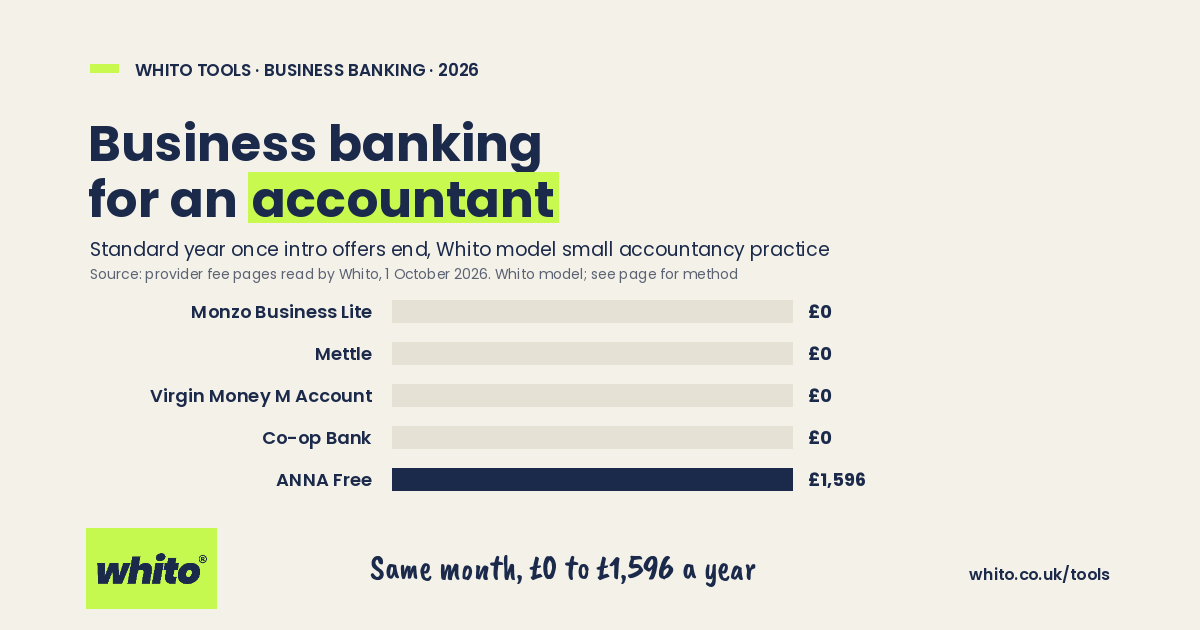
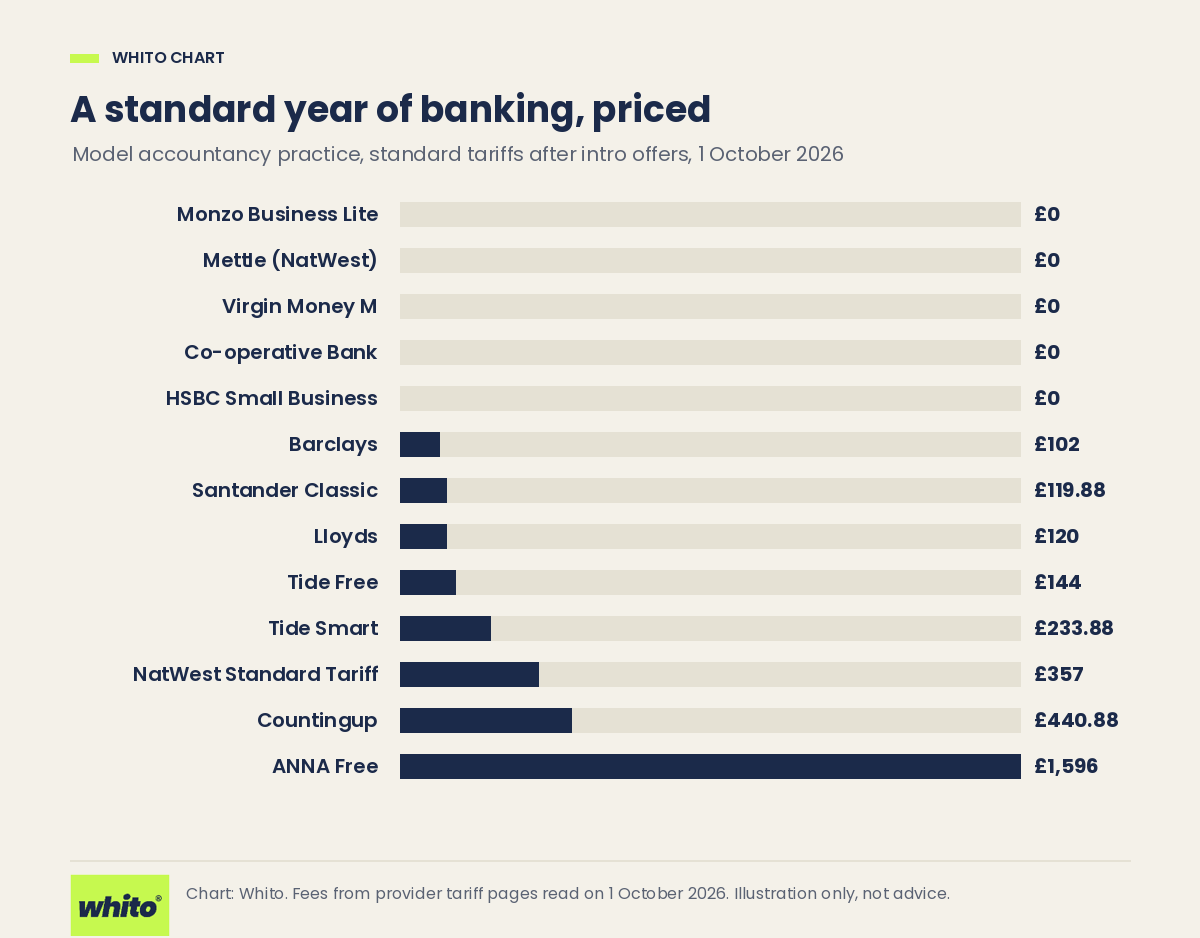
We priced a standard year at 15 UK business accounts on 1 October 2026 for a small practice with 40 client fees a month and no cash, then checked which providers allow firms that hold client money. For our model small accountancy practice, a standard year of banking cost £0 at 5 of the accounts we priced, including Monzo Business Lite and Mettle (NatWest), and £1,596 at ANNA Free.
The accounts that suit accountancy practices
- Monzo Business Lite, £0 a year. No fees for this model. Monzo says Business accounts cannot be used as client trust accounts, so client money needs a separate bank.
- Mettle (NatWest), £0 a year. No fees for this model and FreeAgent included. Only one of two owners can access it. Not for client money.
- Virgin Money M Account, £0 a year. No monthly fee and a branch; Virgin Money says it does not offer client accounts.
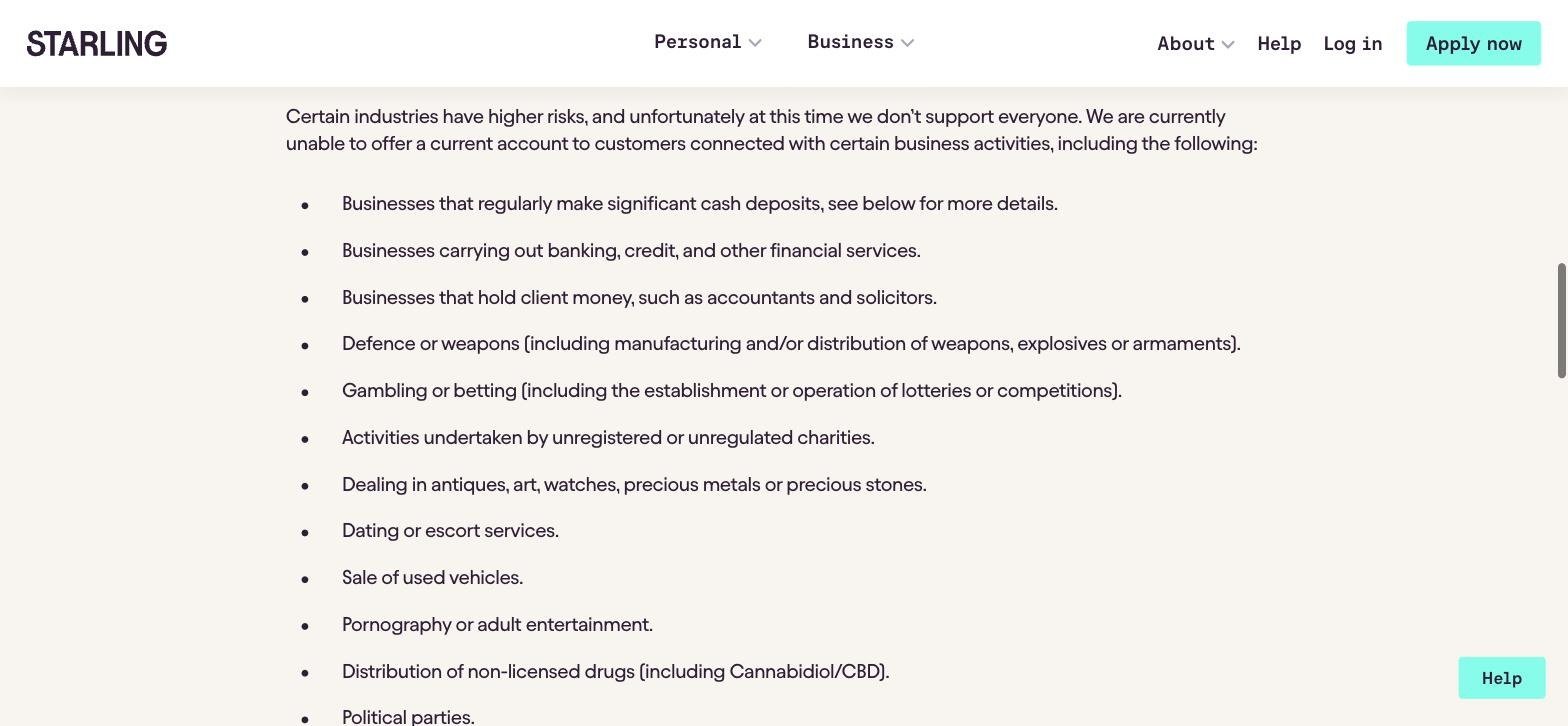
Starling is left out: it lists “businesses that hold client money, such as accountants and solicitors” among the industries it does not support. A practice that never holds client money may still be asked about it.
The model month
| Each month | Small accountancy practice (limited company) |
|---|---|
| Payments received | 40 (£15,000 in total) |
| Transfers sent | 15 |
| Direct Debits | 10 |
| Debit card purchases | 20 |
| Cash paid in | None |
What a standard year cost a small accountancy practice
| Account | Standard year | What drives the bill |
|---|---|---|
| Monzo Business Lite | £0 | £1 per cash deposit; Team plan £25 a month if staff need access |
| Mettle (NatWest) | £0 | £2.75 per cash deposit; one owner can access |
| Virgin Money M Account | £0 | Cash 90p per £100; turnover under £1m |
| Co-operative Bank Business Bank Account | £0 | Cash £1.50 per £100 |
| HSBC UK Small Business Banking | £0 | Post Office cash 1.5% (tariff from 14 December 2026) |
| Barclays Business Current Account | £102 | £8.50 a month after 12 free months; cash 60p per £100 |
| Santander Business Classic | £119.88 | £9.99 a month after 12 free months; counter cash £1.25 per £100 |
| Lloyds Business Account | £120 | £10 a month after 12 free months; counter cash £1.60 per £100 |
| Tide Free | £144 | 20p per transfer in or out after 5 a month |
| Tide Smart | £233.88 | £12.49 a month, 30 transfers included |
| NatWest Standard Tariff | £357 | 35p per electronic item and card payment; cash 95p per £100 plus 95p a deposit |
| Countingup | £440.88 | Plan set by money paid in; 27p per transaction after 3 |
| ANNA Free | £1,596 | E-money; 0.95% of money received above £1,000 a month |
Left out for this trade, and why:
| Account | Why it is not in the table |
|---|---|
| Starling | Does not take businesses that hold client money |
| Revolut Business Basic | Says a Business account cannot hold or manage client funds |
What matters for accountancy practices beyond the fee
The client bank account
If your firm is regulated by ICAEW, its Clients’ Money Regulations require clients’ money to be held in a client bank account at a bank in the firm’s name, with “client” in the title. ACCA, ICAS and other bodies have their own rules. Barclays (Clients Premium Account), HSBC UK (Clients Deposit Account), Lloyds (designated and pooled client accounts through its corporate bank), NatWest (Clients’ Monies Service for firms with 25 or more client accounts or £300,000 in balances, otherwise Client Deposit Manager), Metro Bank (Client Premium Deposit Account) and Allica Bank (pooled and designated client deposit accounts) all describe client account products on their own sites.
Who will not take client money
Starling lists “businesses that hold client money, such as accountants and solicitors” among the industries it does not support. Monzo says it does not allow Monzo Business to be used as a client trust account, and Revolut says a Business account cannot be used to process money from clients.
Running both
Some practices hold the office account at an app bank and the client account at a high street bank. That works if your practice software can see both, and if the client account provider does not require the office account too. Ask before you open.
Before you open
- Decide whether the firm holds client money at all.
- Ask the client account provider whether it requires your office account as well.
- Price your own month: count a month of payments in, payments out, Direct Debits and cash, then use the fees on our best business bank accounts UK page.
- Check protection: who holds the money and whether it shares an FSCS limit. See FSCS protection on business accounts.
More for accountancy practices: the accountant hub and accountant software and tools. Every trade we priced: business banking by trade.
Decide where client money will sit first. It decides which office account you can have.
Questions
What is the best business bank account for accountancy practices?
In our model of a small accountancy practice, priced from published fees on 1 October 2026, 5 accounts tied for the cheapest standard year at £0, including Monzo Business Lite, Mettle (NatWest) and Virgin Money M Account. The cheapest high street bank was Virgin Money M Account at £0. Your own mix of payments and cash decides the answer.
Can an accountant use Starling for business banking?
Starling lists businesses that hold client money, such as accountants and solicitors, among the industries it does not currently support. Check with Starling if your practice holds no client money.
Where can accountants open a client bank account?
Barclays (Clients Premium Account), HSBC UK (Clients Deposit Account), Lloyds (designated and pooled client accounts through its corporate bank), NatWest (Clients’ Monies Service for firms with 25 or more client accounts or £300,000 in balances, otherwise Client Deposit Manager), Metro Bank (Client Premium Deposit Account) and Allica Bank (pooled and designated client deposit accounts) all describe client account products on their own sites.