
Last Updated on October 1, 2026
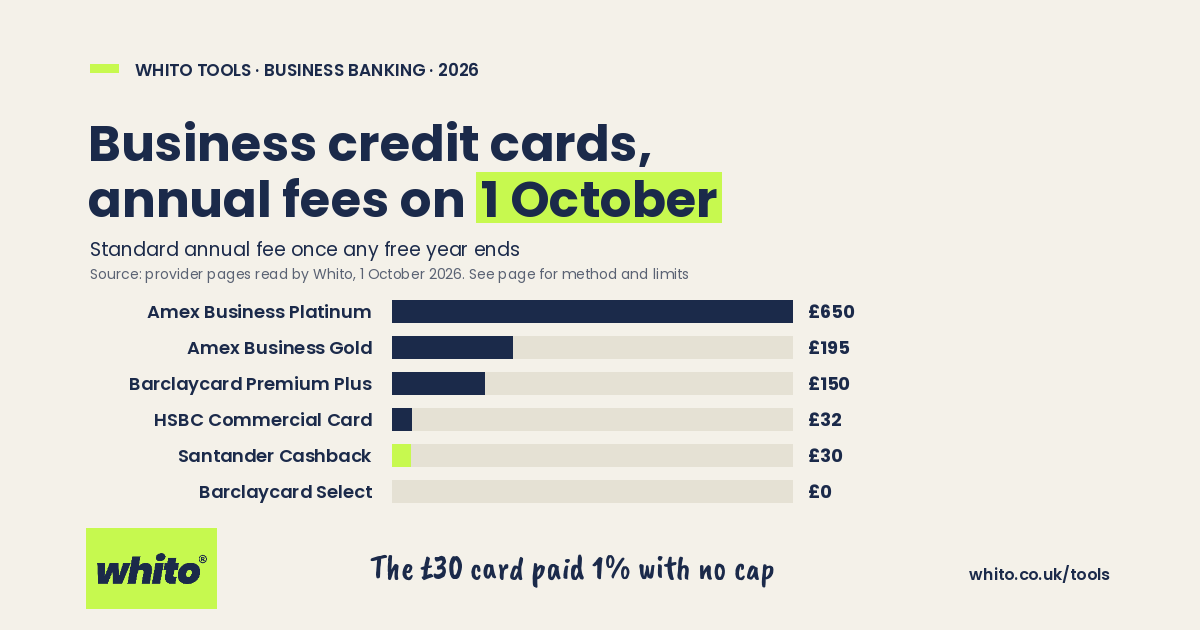
Business credit card tables rank on rewards. The fee lines underneath decide whether the rewards are worth anything.
We read the published fees of eleven UK business cards on 1 October 2026. On 1 October 2026 Santander’s £30 Business Cashback card paid 1% with no cap, while Barclaycard’s £150 Premium Plus capped its 0.5% cashback at £400 a year.
The cards, read on 1 October 2026
| Card | Fee | Representative APR | Cashback or rewards | Non-sterling fee |
|---|---|---|---|---|
| Barclaycard Select Cashback | £0 | 26.8% variable | 1% uncapped, needs £2,000+ spend in the statement month | Not published on pages we could open |
| Barclaycard Premium Plus | £150 a year | 56.0% variable including the fee | 0.5%, capped at £400 a year | 0.99% |
| NatWest Business | £30 per cardholder (year one free; waived at £6,000 annual spend) | 24.3% variable | 1% on fuel and EV charging only | 2.95% |
| Lloyds Business | £32 per cardholder (year one free; waived when combined card spend passes £6,000) | 15.95% variable | 1% fuel and charging, 0.5% other, needs £2,000 per cycle | 2.95% |
| HSBC Commercial Card | Free year one, then £32 per card | 22% variable | None | 2.99% |
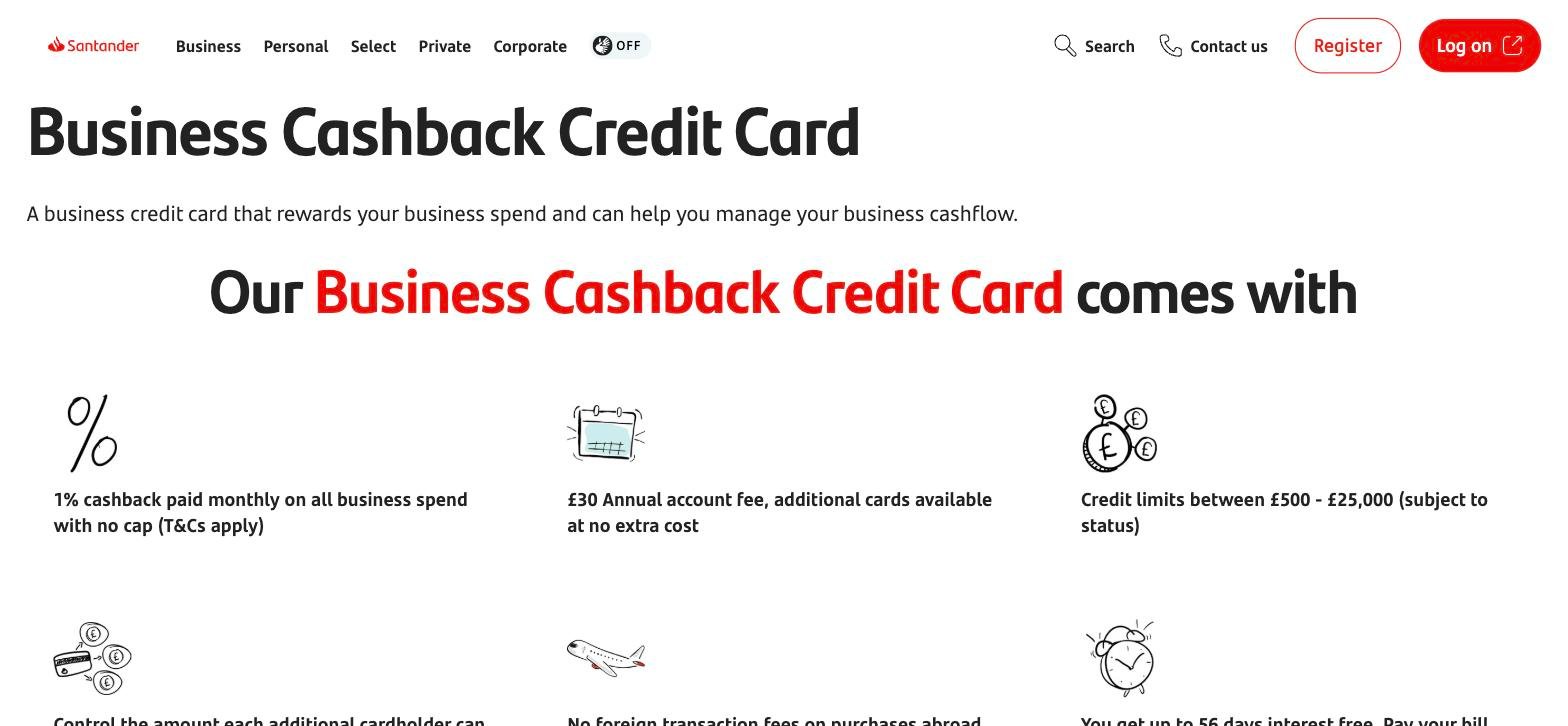
| Santander Business Cashback | £30 a year per business, extra cards free | 23.7% variable | 1% on all spend, no cap | 0% in local currency |
| Capital on Tap | £0 (Pro £299 a year) | From 13.86%; no representative example published | 1% uncapped; Pro adds Avios | 0% |
| Amex Business Gold | £0 year one, then £195 | Charge card; pay in full | Membership Rewards points | 2.99% |
| Amex Business Platinum | £650 a year | Charge card; pay in full | Points plus travel benefits | 2.99% |
| Amex Basic Business | £0 | Charge card; pay in full within 42 days | None | 2.99% |
| Metro Bank Business | £0 | 18.9% variable | None | 0% Europe, 2.99% elsewhere |
The traps in the fee lines
Per cardholder, per year
NatWest, Lloyds and HSBC price per cardholder or per card. Four staff cards at £30 to £32 each is £120 to £128 a year before anyone spends, though NatWest waives the fee on cards that spend £6,000 a year, and Lloyds waives it once combined spend across the cards passes £6,000.
Thresholds under the cashback
Barclaycard Select and Lloyds pay their headline rates only in months or cycles where spend passes £2,000. A quiet month earns nothing. Santander’s 1% has no cap and no monthly threshold on the pages we read, which is why its £30 card led our table.
The £150 card with the £400 ceiling
Barclaycard’s Premium Plus charges £150 a year, which drives its representative APR to 56.0%, and caps its 0.5% cashback at £400. You would need £80,000 of annual spend to hit the cap, and £30,000 just to cover the fee.
Interest-free days shrink with your Direct Debit
HSBC’s card advertises up to 56 days interest free, and settling by full-balance Direct Debit cuts the effective window to around 38 days on its published schedule. Read the payment-timing line, since the two cards either side of it in the table count differently.
Two legal points the tables skip
Section 75 of the Consumer Credit Act makes the card issuer jointly liable for faulty purchases between £100 and £30,000, but only for an “individual”, which the Act defines to include sole traders and partnerships of two or three people. A limited company gets no Section 75 cover on its business card. And personal guarantees are standard: Capital on Tap says most business credit cards require one, and Santander asks for one from limited companies and LLPs. If the company fails, the card debt follows the director home.
Pick the card the way you picked the account: from your own numbers. A £6,000-a-year spender wants the fee waiver; a £50,000 spender wants the uncapped 1%; and a balance that carries interest costs more than any cashback pays. The best business bank accounts UK page covers the account underneath the card.
Questions
What does a business credit card cost in the UK?
Annual fees we read on 1 October 2026 ran from £0 (Barclaycard Select Cashback, Capital on Tap free card, Amex Basic) to £650 (Amex Business Platinum). NatWest, Lloyds and HSBC charge about £30 per cardholder per year, with NatWest and Lloyds waiving it at £6,000 of annual spend.
Do business credit cards have Section 75 protection?
Only for some businesses. The Consumer Credit Act protects an “individual”, which the Act defines to include sole traders and small partnerships, so they can claim under Section 75 on purchases between £100 and £30,000. Limited companies and LLPs sit outside that definition.
Will I have to sign a personal guarantee?
Usually. Capital on Tap says most business credit cards, including its own, require a personal guarantee, and Santander says it asks for one when lending to limited companies or LLPs. The company’s debt becomes yours if the business cannot pay.
Can a sole trader get a business credit card?
At the banks, yes, usually alongside a business current account. Capital on Tap takes limited companies and LLPs only, and Amex’s Business Gold and Platinum are for limited companies and LLPs as well.