

Last Updated on June 11, 2026
Monday.com looks organised.
Boards.
Dashboards.
Automation.
Colour-coded workflows.
But visual order does not guarantee operational clarity.
The real question is:
Does Monday.com drive structured growth.
Or just tidy task lists?
What Monday.com Actually Is
Monday.com is a work management platform.
Not a CRM.
Not a marketing tool.
Not purely project management.
Note: Monday.com can function as a basic CRM, but it is not a dedicated one. If your primary need is sales pipeline management, Pipedrive or HubSpot free will serve you better. Use Monday.com for project and task management, not lead tracking.
It sits in the middle.
It helps teams:
- Track projects
- Assign tasks
- Automate workflows
- Centralise communication
- Monitor timelines
It is about operational visibility.
Where Monday.com Is Strong

For UK businesses scaling teams, Monday.com excels at:
- Cross-team collaboration
- Project tracking
- Marketing campaign management
- Internal accountability
- Visual workflow clarity
If your bottleneck is coordination, it helps.
Ease of Use

One of Monday’s strengths is usability.
- Visual interface
- Drag-and-drop boards
- Customisable workflows
- Clean dashboards
Teams adopt it quickly.
Adoption matters more than features.
Automation Capabilities
Monday.com allows:
- Status-triggered notifications
- Task dependencies
- Deadline alerts
- Workflow automations
It reduces manual follow-up.
But it is not a full automation platform.
It supports the process.
It does not replace it.
Monday.com in Practice: A Real UK Business Example
A London-based property development firm is managing five live projects.
Architects.
Contractors.
Planning consultants.
Internal stakeholders.
Everything runs through email and spreadsheets.
Deadlines are missed quietly.
Approvals get buried in inboxes.
No one has a live view of progress across sites.
They are organised individually.
But not collectively.
What Monday.com Shows Them
They build one board per development.
Each project has:
Clear stages.
Named owners.
Dependencies between tasks.
Visible deadlines.
Within weeks, patterns emerge.
Planning approvals consistently stall because documents are uploaded late.
Contractor tasks are marked complete without an inspection sign-off.
Internal approvals sit untouched for days.
Previously, these delays felt random.
Now they are visible.
That is not a people problem.
It is a workflow visibility problem.
What They Do Next
They simplify the system.
Standardised task stages across all projects.
Automated deadline reminders.
Weekly dashboard reviews at the leadership level.
No complex integrations.
No overbuilt automation.
Just structured oversight.
Within three months:
Project delays are reduced.
Internal communication improves.
Accountability becomes measurable.
Not because Monday.com works magic.
Because work is now visible.
The Honest Caveat
Monday.com does not improve property margins.
It does not negotiate with contractors.
It does not secure planning approval.
It surfaces where coordination breaks down.
If leaders do not review dashboards regularly, nothing changes.
If boards become overly complex, adoption drops.
The platform creates clarity.
Discipline turns that clarity into performance.
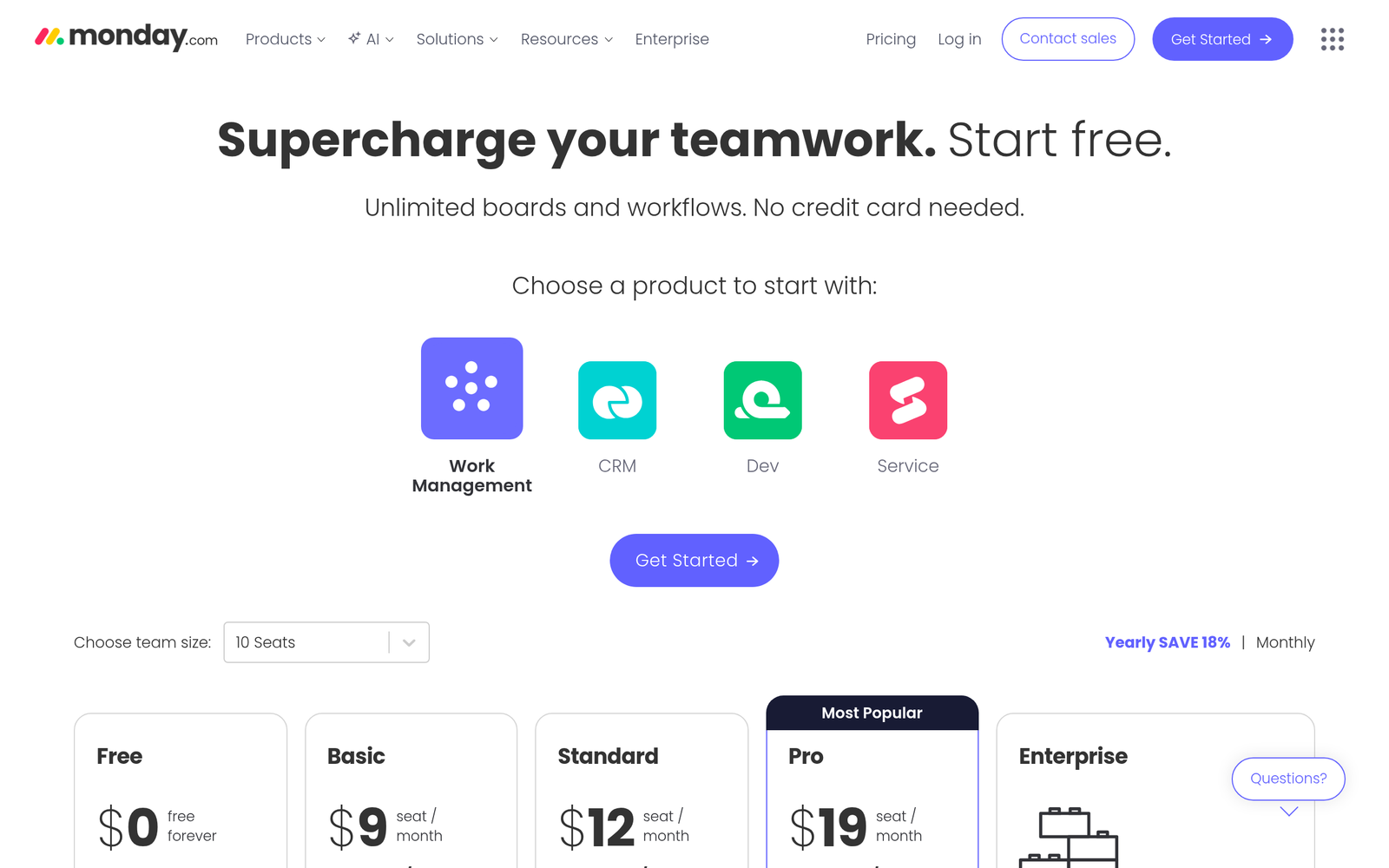
Pricing (UK Context)
Expect roughly:
- Basic plans: £8–£10 per user/month
- Standard plans: £10–£15 per user/month
- Pro plans: £15–£25 per user/month
Enterprise tiers increase from there.
Cost scales with:
- Team size
- Feature access
- Advanced automation
Where Monday.com Falls Short
Monday.com is not ideal for:
- Deep CRM management
- Complex sales pipeline tracking
- Advanced marketing automation
- Financial reporting
It integrates with other systems.
But does not replace them.
If you expect it to manage revenue data directly, you may be disappointed.
Monday.com vs Asana
Monday.com:
- More visual
- More flexible boards
- Broader business positioning
Asana:
- Simpler project structure
- Often cleaner for pure task management
Choice often comes down to team preference.
Note: Monday.com works best for teams of 3 or more who need to track handoffs between people. If you are a solo founder, a simple tool like Todoist or even a spreadsheet is faster. Monday.com adds value when collaboration is the bottleneck, not organisation.
Monday.com vs ClickUp
Monday.com:
- Polished interface
- Strong automation UI
- Simpler learning curve
ClickUp:
- More feature-dense
- Highly customisable
- Steeper setup
Monday.com prioritises clarity.
ClickUp prioritises flexibility.
Does It Drive Growth?
Monday.com does not create growth.
It removes friction.
Growth improves when:
- Campaigns launch on time
- Sales tasks are followed up
- Deliverables are tracked
- Accountability is visible
If operational chaos is slowing you down, Monday.com helps.
If strategy is weak, no tool fixes that.
Who Should Use Monday.com
Good Fit
- Marketing teams managing campaigns and content
- Agencies juggling multiple client projects
- Growing service businesses scaling operations
- Multi-department organisations needing visibility
- Teams struggling with coordination and deadlines
Probably Overkill
- Solo founders with simple task lists
- Very small teams (under 3 people)
- Businesses with straightforward workflows
- Anyone who needs a CRM, not a task manager
Overbuilding operations early creates drag.
The Adoption Risk
The biggest mistake:
Building complex boards no one uses.
Monday.com succeeds when:
- Workflows are defined clearly
- Responsibilities are assigned
- Leadership enforces usage
- Reporting is reviewed regularly
Software without discipline becomes decoration.
The Whito View
Final Thought
Monday.com will not fix:
- Weak marketing strategy
- Poor positioning
- Low conversion rates
It will fix:
- Chaos
- Miscommunication
- Task drift
If your bottleneck is coordination, it is worth considering.
If your bottleneck is clarity, fix that first.
Structure drives growth.
Tools support structure.
Never the other way round.
Monday.com: Common Questions Before You Roll It Out
Is Monday.com a CRM?
No, it’s primarily a work management and workflow platform. It can support basic sales tracking, but it doesn’t replace a dedicated CRM for revenue management.
Is Monday.com suitable for small UK teams?
Yes, especially if coordination and task visibility are becoming messy. For solo founders or very small teams, it can be more structure than you need.
Does Monday.com help with marketing performance?
Indirectly. It improves campaign execution, accountability, and deadlines, but it does not improve positioning, traffic, or conversion rates on its own.
Is Monday.com worth the cost as we grow?
It can be if operational delays and miscommunication are slowing delivery. If strategy is weak or processes are undefined, software alone won’t justify the spend.
See how real UK businesses do this well
Our Stolen With Pride series breaks down smart marketing moves from real UK businesses. No theory, just practical ideas you can use. See how Surreal Cereal turned LinkedIn into a free marketing channel, how Bloom & Wild’s email opt-out built more loyalty than any campaign, and more.
