
Last Updated on September 17, 2026
The consumer unit, still often called the fuse board, is the heart of a home’s electrics. Replacing one is a common job and, unfortunately, a commonly overpriced one. Here is what it should cost in 2026 and how to spot a fair quote.
What it costs
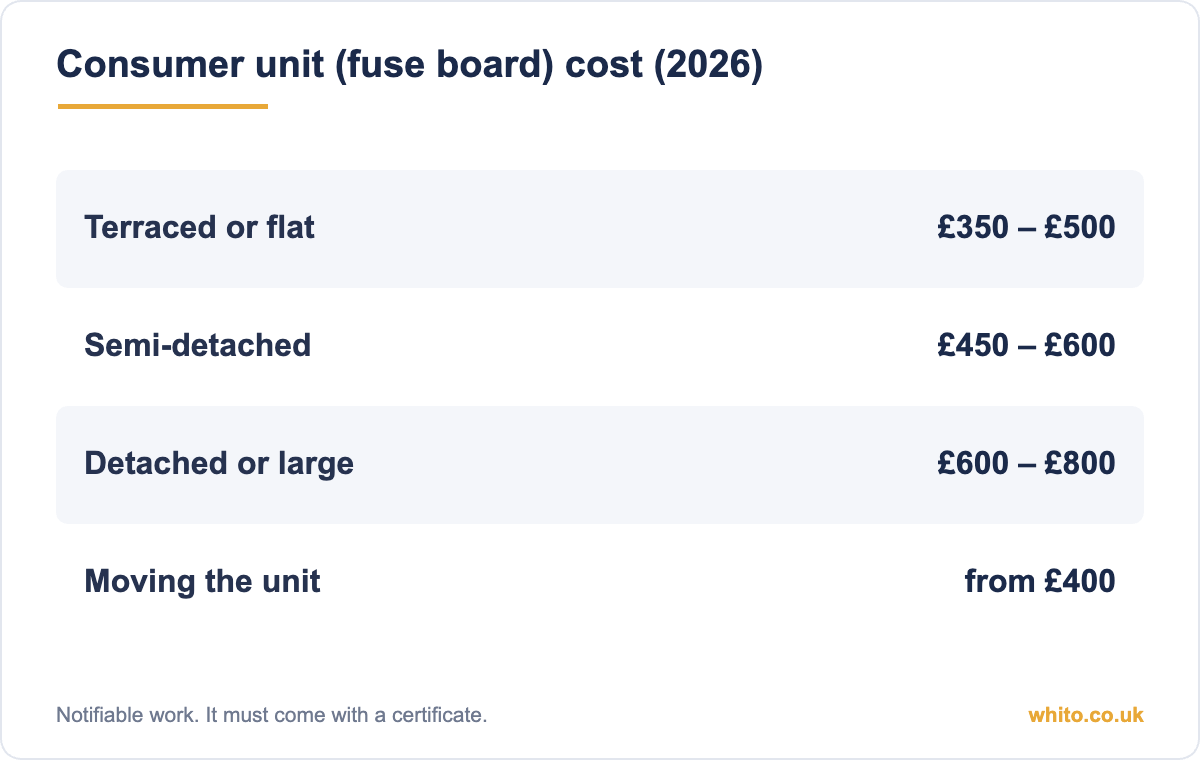
Most replacements land between £350 and £800, depending on the property and the board. A terraced house or flat sits at the lower end, a large detached home at the top. Moving the unit to a new location adds cost, from around £400, and much more if the incoming mains cable has to move with it.
What is included
A fair price covers removing the old unit, supplying and fitting a new one with modern RCD or RCBO protection, testing, and the certificate. Modern boards protect individual circuits, which is safer and worth having.
When you need one
Common reasons are an old board with rewireable fuses, no RCD protection, a unit that keeps tripping, or an upgrade needed before adding something like an EV charger or an electric shower.
The red flags
This is notifiable work, so it must come with a certificate. Be wary of a quote with no certificate mentioned, a price far below the others, or pressure to replace a board that an inspection has not shown to be faulty. Get a second opinion if in doubt.
The sharp takeaway
Expect £350 to £800 for a straightforward replacement including the certificate. If a quote skips the certificate or sits well below the rest, ask why before you book.
Whito verifies UK electricians against Companies House, so you can check the electrician before they work on your board. Find a verified electrician near you.
Prices are typical 2026 UK ranges. Confirm locally.
Related on Whito
- EV charger installation cost
- How much does it cost to rewire a house?
- How much do electricians charge in the UK?