
Last Updated on September 19, 2026

Some links in this article are commission-based, meaning we may earn a small fee if you purchase through them, at no extra cost to you. They do not buy a place in any ranking. Full disclosure: https://whito.co.uk/how-we-make-money/ and https://whito.co.uk/review-methodology/
Ask the uncomfortable question before spending a pound on a website: what is it for? The buyers are on Rightmove and Zoopla, and they are not coming back; the portals won that war a decade ago and your site will not re-fight it. What the portals cannot do is win you the instruction. The vendor deciding who sells their house looks at the portals to find houses and at your website to judge you. Your site is a valuation machine wearing an agency’s clothes, and every page on it either feeds that machine or decorates it.
The rest of our work for agents is at whito.co.uk/estate-agents/.
Say the quiet part about portals, out loud, on the site
Vendors half-understand the portal relationship and fully distrust it. Address it in plain text on your selling page: “Your home will be on Rightmove and Zoopla within hours of instruction, alongside our own buyers list and this website.” That sentence does three jobs: it confirms you buy the reach they expect, it stops the “do I even need an agent with a website” wobble, and it frames the portals as your tools rather than your replacement. Rightmove and Zoopla sit beside your site, not instead of it, and the agent who explains that calmly sounds like the agent who understands the market.
What the portals will never host is the reason to choose you: your people, your fees, your sold record, your street-level knowledge. That is the website’s territory, and it is uncontested by the biggest players in your industry. Use it.
The money page: the valuation
One page carries the commercial weight of the whole site, so build it like it matters:
- The headline is the action. “Find out what your Norwich home is worth.” Not “Vendors”. Not “Our services”.
- Two routes, honestly labelled. An instant online estimate for the curious (“a computer’s guess from sold data, useful but rough”) and a booked in-person valuation for the serious (“a person, in your house, with comparable sales from your street”). Labelling the instant one as rough sets up the case for the real one.
- What happens next, step by step. Who visits, how long it takes, that there is no obligation and no fee, and, crucially, that you will not hound them. The fear of being sales-chased suppresses more valuation requests than any design flaw.
- Proof beside the form. Three recent sales: street, asking versus achieved, days on market. Vendors are choosing a negotiator; show negotiation results.
The order of blocks on an estate agency valuation page: an action headline, two honestly labelled routes (instant online estimate and booked in-person valuation), the what-happens-next steps with a no-hounding promise, and recent results beside the form.
The money page
The valuation page, block by block
Headline
“Find out what your Norwich home is worth”
The headline is the action, not “Vendors” or “Our services”.
Two routes
Instant estimate · “a computer’s guess from sold data, useful but rough”
Booked valuation · “a person, in your house, with comparable sales from your street”
What happens next
Who visits, how long, no fee, no obligation
And the promise that suppresses most drop-off: “we will not hound you”.
Beside the form
Three recent sales: street, asking vs achieved, days on market
Vendors are choosing a negotiator. Show negotiation results.
Two honest routes and a no-hounding promise. The form converts because the fear is answered beside it.
The pages, split by who is deciding
- Home
- Free valuation (the money page)
- Selling with us (fees included)
- Lettings and landlords (fees published, as the law requires)
- Area guides (one per patch you genuinely know)
- Sold and recent results
- Meet the team
- Contact and branch
Sales and lettings are different businesses with different customers and different regulatory duties; a landlord evaluating your management service should never have to wade through first-time-buyer content. And note what is missing: a property-search page pretending to be a portal. List your stock cleanly, feed it from your CRM, but do not build the site around a search bar you cannot win with.
Fees, published like you mean it
Lettings fees you must publish; that argument ended with the Tenant Fees Act era. Selling fees, almost every agent still hides, which is exactly why publishing yours works. “1.2% including VAT, no sale no fee, no tie-in beyond 8 weeks” turns the awkward third question of every valuation visit into a reason you got the visit at all. If your fee is premium, publish it with its defence: average achieved-versus-asking, average days to sale. Vendors do not pick the cheapest agent; they pick the one whose confidence looks like evidence.
Area guides: the only local SEO that is honestly yours
Every agent claims local knowledge; almost none writes it down. An area guide per patch, the real ones, at neighbourhood level, is where the claim becomes content: which streets get the school catchment, where parking actually works, what a two-bed terrace achieved this spring, which way the market is leaning and why. Written by the person who does the viewings, with their name on it.
This is also your search strategy. “Estate agents [town]” is a bloodbath of portals and nationals, but “living in [neighbourhood]” and “[neighbourhood] property market” searches belong to whoever bothers, and the vendor googling their own street’s market is the hottest lead in your world, months before they ring anyone.
Branch basics still apply: Google Business Profile per office with the full address, “Real estate agency” primary category, reviews mentioning street names where you can get them, and photographs of the actual branch frontage, because vendors still drive past.
Proof, and the badge the law already requires
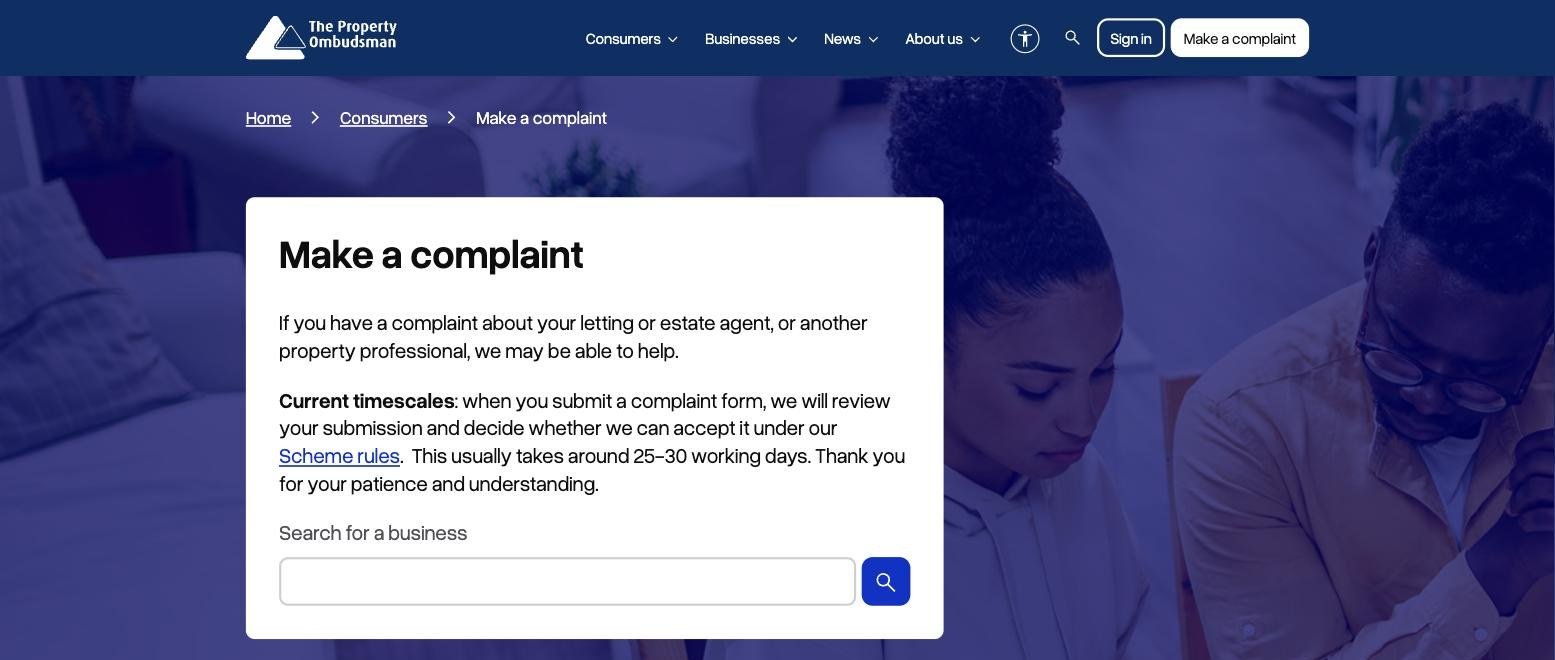
Every agent must belong to a redress scheme, The Property Ombudsman or the Property Redress Scheme, and vendors increasingly know to look. Display the logo, link it to your entry, and add Propertymark membership and client money protection if you hold them, with one plain line each on what they protect. This is the estate agency version of the plumber’s Gas Safe number: legally required, largely wasted by being hidden in footers at eight pixels.
Then the proof only you have: a sold gallery built from boards on named streets, asking versus achieved where it flatters, days on market where it flatters more. Update it monthly; a sold page that stops in spring tells its own story.
Example sold-gallery cards for an estate agency showing street name, asking versus achieved price and days to offer.
Proof only you have
The sold gallery, card by card
Sold
Earlham Road
Asking £315,000 · achieved £312,000
19 days to offer
Sold
Unthank Road
Asking £450,000 · achieved £455,000
11 days to offer
Let
Colman Road
Listed to referenced tenant
8 days
Illustrative cards; use your own streets and figures. Asking versus achieved, street by street, is the negotiator’s CV, published. Update monthly, because a sold page that stops in spring tells its own story.
Five seconds through a vendor’s eyes
On a phone: agency name and town, one line that says both trades (“Selling and letting homes across Norwich since 2011”), the valuation button dominant, the redress and Propertymark marks visible, one human face. The test is brutal for this industry because most agency homepages greet the vendor with a search bar, which is the interface for the customer who is not choosing you.
Build route: WordPress, because the site is a publishing operation
The three ways a estate agency gets a website built: doing it yourself on a website builder (£15–£25/mo), hiring a freelancer (£1,500–£4,000), or a monthly website deal (£100–£300/mo).
The three build routes
What a estate agency website costs in 2026
Do it yourself
£15–£25/mo
Workable for a new one-branch agency while the brand finds its feet. The CRM feed forces the move later.
Freelancer
£1,500–£4,000
WordPress build by a freelancer who has integrated an agency CRM feed before. The default.
Monthly deal
£100–£300/mo
Refuse platform deals where your “included website” is template forty-seven on a domain they control.
The bands this guide uses throughout, side by side. Full reasoning in the build-route section below.
Default: WordPress on solid hosting (Hostinger is the host we review), built by a freelancer who has integrated an agency CRM feed before, £1,500 to £4,000. The area-guide strategy makes you a small publisher: guides, monthly market notes, sold updates, per-office pages. WordPress handles that and takes the standard CRM portal-feed plugins without drama. Ask specifically about the feed at the briefing stage; it is the one technical requirement that separates agency sites from every other local trade’s.
When not to: a new one-branch agency can open on a site builder while the brand finds its feet, and our builders comparison shows what that trade-off costs; the feed and the area guides will eventually force the move. What to refuse: the industry-platform deal where your “included website” is template forty-seven with your logo swapped in, indistinguishable from the agency two doors down on the same platform, on a domain they control.
Domain in the agency’s own account: hartleyandhome.co.uk, bought at Namecheap (our review), auto-renew on, registered to the company. Agencies rebrand and merge; the domain history you keep is SEO equity the next brand inherits.
Email: the six-month vendor
The valuation machine feeds on an asymmetry: most people who request a valuation are six to twelve months from instructing anyone. The agent who wins is rarely the one who valued highest; it is the one still usefully in touch when the decision lands. That is an email job. A monthly note, “what sold in [neighbourhood] this month, and what it means if you are thinking of moving”, through MailerLite, to every valuation contact who consented. Local, factual, unsalesy, and unsubscribable. Twelve of those emails cost you an hour a month and outperform every re-canvassing letter your competitors still print.
The two homepages a vendor compares
Agency A: a full-screen property search bar, six listings, “passionate about property since 1998”, no fees, no faces, valuation link in the hamburger menu. It is a worse Rightmove, and the vendor has the better one open in the next tab.
Agency B: “Selling and letting homes across Norwich. Book a free valuation.” A negotiator’s face with a name. “1.2% inc VAT, no sale no fee.” Redress and Propertymark marks. Three sold boards on streets the vendor recognises. The area guide for their own neighbourhood one tap away. Agency B looks smaller and wins the instruction.
Seven ways agency sites lose instructions
- Built as a portal clone, competing where the war is already lost.
- Valuation buried in a menu instead of dominating every page.
- No fees anywhere, preserving the one awkwardness every vendor dreads.
- No people, in the industry where the vendor is choosing a person.
- Area pages written by a copywriter who has never parked there.
- Redress and CMP logos present but unclickable and unexplained.
- A sold page last updated two stamp-duty changes ago.
Fifteen lines before launch
- Valuation page live, two routes, no-hounding promise, proof beside the form.
- Valuation button in the header of every page.
- Selling page live with published fees and tie-in terms.
- Lettings fees published in full, as required.
- Redress scheme logo displayed and linked to your membership.
- Propertymark / CMP shown and explained if held.
- Three area guides live, each with streets, real figures and a byline.
- Sold gallery current within the last month.
- Team page: real photos, real names, direct emails.
- Portal relationship explained in one calm sentence on the selling page.
- Google Business Profile per branch, correct category, branch photos.
- Five Google reviews, ideally naming streets or outcomes.
- Domain registered to the company in its own Namecheap account.
- Google Search Console verified, sitemap in. Free, and it will show you which area guide is working.
- A vendor-aged relative has found your fee and booked a fictional valuation in under two minutes.
The first month of the machine
Week one: review requests to your last ten completions, asked for by the negotiator who did the deal. Week two: write area guide number four for the patch where you want more instructions, not the one where you already dominate. Week three: check Search Console for which neighbourhoods pull readers; that is next month’s canvassing area, chosen by data instead of habit. Week four: send the first monthly market note to the valuation list, and watch which streets open it, because those are the vendors warming up.
Four questions from behind the branch desk
Do we put our stock on the site at all? Yes, cleanly fed from your CRM, because vendors judge how their home would look. Just do not make search the homepage; the stock is evidence, not the product.
Instant valuation tools: gimmick or lead source? Lead source, if labelled honestly as an estimate and followed by a human offer. Unlabelled, it either scares vendors with a low number or wins valuations you then have to talk down from a high one.
How do we compete with the online agents’ fee messaging? Publish your fee next to achieved-versus-asking figures. The fixed-fee agents cannot show negotiation results; that is the entire counterattack, and it only works in the open.
Is a lettings-only page really necessary? If you want landlords, yes. A landlord choosing a managing agent is doing regulatory due diligence, CMP, redress, fee schedule, and a site that answers it without a phone call is on the shortlist before you know they exist.