Last Updated on September 17, 2026
Most accountancy firms in the UK rely entirely on referrals and word of mouth. That works until it stops working. Marketing for accountants UK firms need does not have to be complex, but it does need to be consistent.
The problem with referral-dependent growth is unpredictability. Some months bring five new clients. Some bring none. You have no control over the pipeline and no way to plan capacity.
Marketing for accountancy firms is not about replacing referrals. It is about building a system that supplements them with consistent, measurable channels.
Note: Accountancy firms regulated by ICAEW, ACCA, or AAT must ensure all marketing is factual and not misleading. Client testimonials should be genuine, fee comparisons should be accurate and verifiable, and any claims about results must be substantiated. Always check your regulatory body’s guidance before launching campaigns.
Why marketing for accountants UK firms matters now
| Channel | Effectiveness | Typical Cost | Time to Results |
|---|---|---|---|
| Google Business Profile | Very high for local firms | Free (time investment) | 1–3 months |
| SEO (local + service pages) | High, long-term | £500 – £2,000/mo | 4–8 months |
| Google Ads | High for specific services | £500 – £1,500/mo | Immediate (with optimisation) |
| LinkedIn (personal profiles) | Strong for B2B and advisory | Free (time investment) | 3–6 months |
| Referral partnerships | Very high conversion rate | Free (relationship investment) | 1–3 months |
| Content marketing | Moderate, builds authority | £200 – £800/mo | 4–12 months |
Fix your website first
Most accountancy firm websites fail at the basics. They describe the firm but not the client. They list services but not outcomes. They use language like “proactive approach” and “tailored solutions” that every other firm uses too.
Effective marketing for accountants UK practices focus on building trust and demonstrating expertise online.
A website that generates enquiries needs a clear headline stating who you help and what outcome you deliver, dedicated service pages for each main offering with enough detail that a prospect understands exactly what they get, proof in the form of client logos, testimonials, or case studies, obvious contact methods including phone number and a simple enquiry form, and local signals including your address and the areas you serve.
Note: Create a separate page for each core service: year-end accounts, tax planning, VAT returns, bookkeeping, payroll, management accounts, and advisory. Each page targets different search terms and different buyer needs. A single “Services” page that lists everything is not enough.
Google Business Profile for accountants
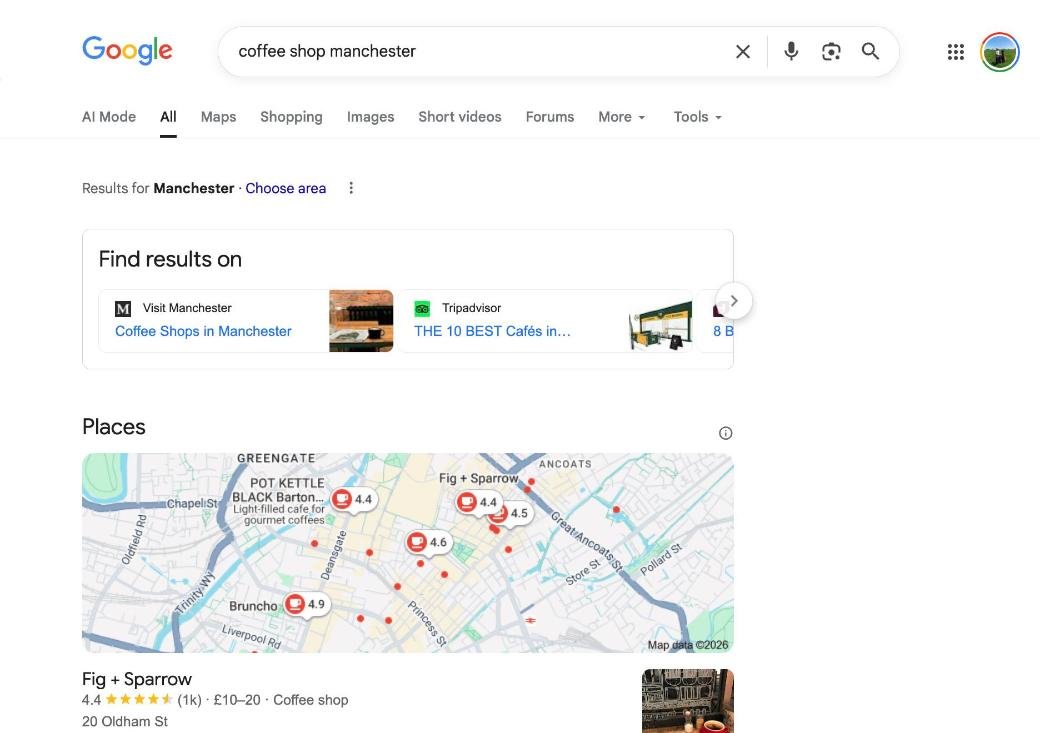
For local accountancy firms, Google Business Profile is the single most impactful marketing asset. When someone searches “accountant near me” or “accountant in [your town],” the local pack results appear before any website.
Claim and optimise your profile. Choose “Accountant” or “Chartered Accountant” as your primary category. Add secondary categories for specific services. Upload photos of your office and team. Collect genuine reviews from satisfied clients. Post weekly updates about tax deadlines, regulatory changes, or practical tips.
Content that attracts accountancy clients
Accountancy clients typically search for information before they search for a firm. They Google “when is the self-assessment deadline” or “do I need to register for VAT” before they search “accountant near me.” Content that answers these questions positions your firm as the expert they then hire.
Write about tax deadlines, common filing mistakes, allowable expenses, VAT thresholds, Making Tax Digital requirements, and industry-specific financial guidance. Practical, specific content that solves a real problem attracts the right visitors and demonstrates expertise.
Referral partnerships that work
Accountants sit at the centre of a professional referral network. Solicitors, financial advisers, mortgage brokers, bookkeepers, and business coaches all serve overlapping client bases. Formalising referral partnerships with complementary professionals creates a steady pipeline that feels natural because it is based on genuine mutual value.
The key is reciprocity and consistency. Refer clients to your partners. Check in regularly. Make it easy to refer by providing a simple description of your ideal client and a direct contact method.
Measuring what works
Track every new enquiry source. Ask “how did you find us?” on every initial call or form. Log it in your practice management system or CRM. After six months, you will have clear data on which channels generate clients, not just leads. Invest more in what works. Cut what does not.
One foundation underpins all of this: being easy to verify. In the UK, anyone can legally call themselves an accountant, so making your qualification and proof obvious is one of the cheapest ways to win the clients worth having.
The bottom line
Want to know if AI recommends your business?
The Whito Visibility Check tests whether ChatGPT, Gemini, Copilot and Google AI recommend you, and gives you prioritised fixes. Free. No card, no obligation.
Take the free Visibility CheckSee how real UK businesses do this well
Our Stolen With Pride series breaks down smart marketing moves from real UK businesses. No theory, just practical ideas you can use. See how Surreal Cereal turned LinkedIn into a free marketing channel, how Bloom & Wild’s email opt-out built more loyalty than any campaign, and more.