
Last Updated on September 8, 2026
Quick Verdict
Namecheap is a strong choice for UK businesses that need affordable domain registration and entry-level hosting. It is not built for high-traffic, revenue-critical websites. Best for businesses in the Start stage of growth.
| 7.2/10 Overall | 8.5/10 Value | 6.5/10 Performance | 6.0/10 Support |
Last Updated on May 20, 2026
Namecheap is known for one thing.
Low prices.
Cheap domains.
Cheap hosting.
Cheap SSL.
Note: Always register your.co.uk domain alongside your.com. It costs under £10 per year and stops competitors or domain squatters from taking it. For UK businesses,.co.uk still carries more trust with local customers than.com alone.
But cheap infrastructure can either protect margin or create hidden costs.
The real question is not whether Namecheap is affordable.
It is whether it is appropriate for a UK business that expects growth.
Verdict: the cheapest safe pick for domains and starter hosting
If you mainly want low-cost domains or entry-level hosting, Namecheap is hard to beat on price. Check the current rates before you commit.
Check Namecheap prices →Affiliate link. We may earn a commission at no extra cost to you.
The Whito stage check
What Namecheap actually is
Namecheap started as a domain registrar in 2000. It now offers a broader product range, but domains remain its strongest category.
It is primarily positioned at startups, side projects, and early-stage businesses. Not enterprise infrastructure.
Where Namecheap is strong
1. Domain pricing
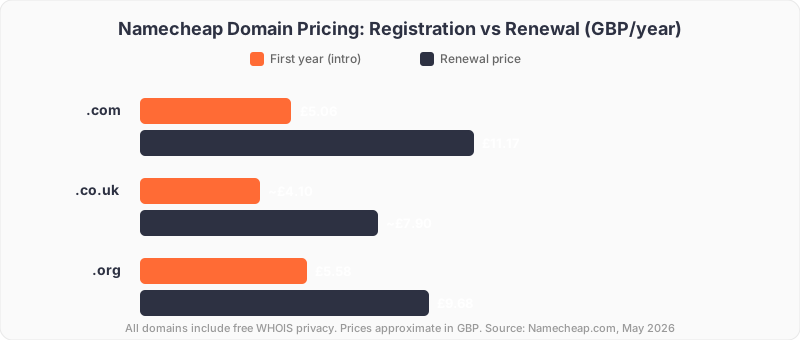
Namecheap is consistently competitive on.com and.co.uk domains. Renewal pricing is more transparent than most registrars, and WHOIS privacy is included free on every domain.
For domain ownership alone, Namecheap performs well. If you simply need secure domain control, it is reliable.
Namecheap domain pricing: first-year vs renewal rates in GBP
2. Transparent pricing
Note: When comparing domain registrars, always check the renewal price, not the first-year price. Some registrars offer £1 domains that renew at £15 or more. Namecheap is more transparent than most on this, but always verify.
Compared to some large hosting providers, Namecheap shows renewal pricing clearly, offers predictable billing, and avoids aggressive upsell funnels. Transparency reduces friction. That matters for early-stage businesses.
3. Entry-level hosting cost
Shared hosting plans are positioned for affordability. Starter plans begin at £1.70/month on yearly billing, making them significantly cheaper than premium competitors.
For brochure websites, low-traffic sites, and testing environments, it is cost-efficient.
Namecheap shared hosting: plan pricing comparison on yearly billing
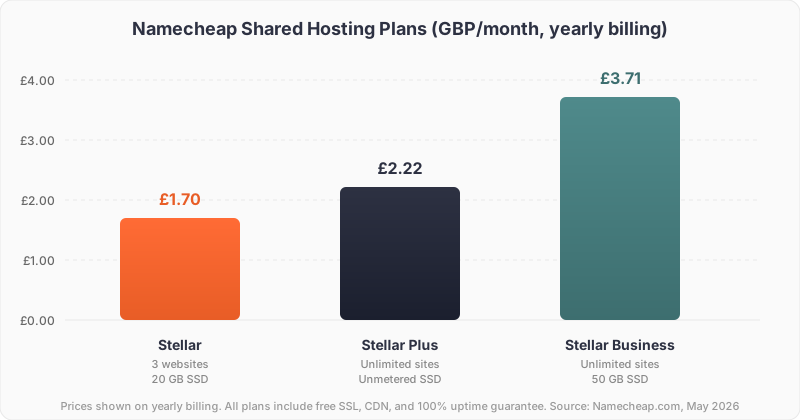
Here is what you actually get with each plan, based on current pricing as of May 2026.
Prices reflect yearly billing as of May 2026. All plans offer a 30-day free trial. Source: Namecheap.com
Where it falls short
1. Performance under load
Shared hosting environments are not built for heavy traffic. If you run e-commerce, high-converting landing pages, or paid ad traffic, performance becomes critical.
Cheap hosting can mean slower load times, shared resource limitations, and higher bounce rates. Performance affects conversion.
2. Limited scalability for growth
As traffic grows, you may need dedicated resources, advanced caching, and higher uptime guarantees. While Namecheap offers VPS and higher-tier plans, it is not positioned as a high-performance growth hosting provider like specialist managed WordPress hosts.
Migration later is possible. But migration costs time.
3. Support depth
Support is functional. But not strategic. If you need infrastructure consultation, performance optimisation advice, or advanced configuration, you may outgrow the support tier quickly.
4. No UK data centre
Namecheap’s data centres are in the US and EU. There is no UK-specific data centre option. For most UK businesses, the Supersonic CDN compensates for this. But if data residency matters for your sector (regulated industries, for example), this is worth noting.
EasyWP: Namecheap’s WordPress hosting
Namecheap also offers EasyWP, a managed WordPress hosting product separate from its shared hosting. It is simpler to set up but carries a different pricing structure.
EasyWP uses NVMe storage and bills monthly with no long-term commitment. All plans include unlimited bandwidth and visitors. Source: Namecheap.com, May 2026
Note: EasyWP renewal prices jump significantly. The Turbo plan goes from £10.35 to £14.08/month, and Supersonic from £15.57 to £20.05/month. Factor renewal pricing into your budget from day one.
Namecheap in practice: A real UK business example
A Leeds-based accounting startup is launching its first website. Two partners. Limited budget. Local client focus.
They need a domain, email addresses, and a simple brochure site. Nothing complex. No paid traffic yet. No national SEO campaign. Just credibility.
What Namecheap shows them
They register a.co.uk domain at a competitive price. WHOIS privacy included. SSL certificate added. Shared hosting activated.
Within a week, their WordPress site is live. Costs are low. Billing is predictable. No aggressive upsells.
For their stage, Namecheap works. It keeps overhead down while revenue is uncertain.
What changes as they grow
Eighteen months later, things shift. They begin running Google Ads for “accountant Leeds business” and “tax advisor for contractors UK.” Traffic increases. Landing pages slow slightly under load. Performance varies at peak times.
Nothing catastrophic. But now performance affects revenue. A slower page means fewer enquiries. A delayed response means lost momentum.
The infrastructure that once protected the margin now starts to influence conversion.
What they do next
They keep the domain with Namecheap. But migrate hosting to a stronger managed WordPress provider. Load times improve. Stability increases. Ad performance becomes more consistent.
Monthly cost rises. So does confidence.
Whito tip: You can keep your domain registered with Namecheap (it is genuinely strong for that) while hosting your site elsewhere. Domain registration and hosting do not need to be with the same provider.
Pricing snapshot (May 2026, GBP)
Shared hosting prices based on yearly billing. EasyWP bills monthly. Always model year-two cost. Source: Namecheap.com, May 2026
Namecheap vs competitors
Here is how Namecheap stacks up against the hosting providers UK businesses most often consider.
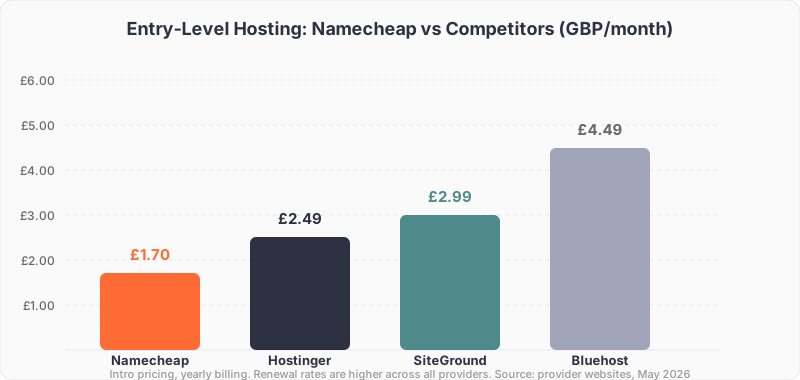
Entry-level shared hosting pricing comparison across major providers
Vs Hostinger
Hostinger often focuses on speed benchmarks and WordPress optimisation. Namecheap focuses on price and domain strength. If performance is slightly more important than pure cost, Hostinger often edges ahead. If you want the cheapest reliable entry point and strong domain management, Namecheap wins.
Vs SiteGround
SiteGround prioritises performance and managed hosting experience. It costs more but offers deeper support and UK-based servers. The trade-off is cost vs performance. For businesses expecting growth within 12 months, SiteGround may save money in the long run by reducing migration friction.
Vs managed WordPress hosts
Managed hosts charge more but optimise for speed and support depth. If your website is core revenue infrastructure, managed hosting protects margin better than saving £3/month on shared plans.
Who should use Namecheap
Good Fit
Early-stage businesses needing affordable domains
Personal brands and side projects
Low-traffic brochure sites
Businesses prioritising cost control over performance
Anyone wanting to separate domain registration from hosting
Not the Right Fit
High-growth e-commerce stores
Heavy paid traffic funnels
Performance-sensitive, revenue-critical websites
Businesses needing UK-based data centres
Operations needing strategic infrastructure support
Cheap hosting can increase bounce rate, conversion leakage, and support time spent troubleshooting. If your website drives revenue, infrastructure quality affects ROI.
Saving £20 per month while losing enquiries is not margin control.
Security and SSL
Namecheap provides free SSL certificates on all hosting plans, basic security tools via Essential and Advanced tiers, and domain management with WHOIS privacy included.
For most UK businesses, baseline security is sufficient. But advanced threat monitoring may require external tools. The Stellar Business plan adds Imunify360 for more proactive protection.
Migration reality
Many businesses start on cheap hosting, then upgrade. That path is normal.
The key question is: will you outgrow it within 12 to 24 months? If yes, consider whether starting on slightly stronger infrastructure reduces friction later.
Namecheap does offer free website migration on all shared hosting plans, which lowers the barrier to entry. Moving away later is also straightforward for most WordPress sites.
The Whito view
The Whito View
Namecheap is strong for domain ownership, budget hosting, and early-stage projects.
It is not built for performance-first growth businesses.
The decision depends on traffic expectations, revenue reliance on website performance, and growth ambition.
Use Namecheap for domains. Consider stronger hosting once your site drives revenue.
Whito takeaway
Namecheap delivers low-cost domains and entry-level hosting reliably.
For early-stage UK businesses, it is often sufficient.
For growth-focused businesses where website performance directly affects revenue, infrastructure should be treated as an investment, not a safety net.
Choose based on ambition. Not just price.
Structure before scale.
Namecheap: Common questions before you buy
Is Namecheap good for a business website in the UK?
For domains and low-traffic brochure sites, yes. Namecheap offers competitive.co.uk pricing (from around £4.10/year) and shared hosting from £1.70/month. For performance-critical or revenue-heavy websites, it may be too limited long term.
Is Namecheap hosting reliable?
Namecheap offers a 100% uptime guarantee on all shared hosting plans and uses LiteSpeed servers with free CDN. It is reliable at the entry level and fine for simple sites. Under heavier traffic or paid campaigns, shared hosting performance can become a constraint.
Are Namecheap prices really as low as they look?
Intro prices are competitive. For example,.com domains start at £5.06/year but renew at £11.17/year. Shared hosting starts at £1.70/month on yearly billing. Renewal pricing is relatively transparent compared to some providers, but always check year-two costs and avoid budgeting only for the first term.
Should I host my revenue-driving website with Namecheap?
If your site directly drives leads or sales at scale, stronger performance-focused hosting may better protect margins. If you are launching or testing, Namecheap is a cost-effective starting point. You can keep your domain with Namecheap while hosting elsewhere.
Does Namecheap have UK data centres?
No. Namecheap’s data centres are in the US and EU. They include a free Supersonic CDN which helps with UK load times, but there is no UK-specific data centre. Competitors like Hostinger (Manchester) and SiteGround (London) offer UK-based options.
What is EasyWP and how is it different from Namecheap shared hosting?
EasyWP is Namecheap’s managed WordPress hosting product. It uses NVMe storage and bills monthly with no long-term commitment. Plans start with a free first month then £7.37/month. It is simpler to manage than shared hosting but more expensive. Shared hosting is better value for most businesses.