
By Jacob Whitmore · Published · Updated
Wix is easy.
You drag things into place, drop them on the page and publish, and for many UK businesses that is exactly what they want. The real test is whether it stays easy once growth gets serious.
The Whito stage check
What Wix actually is
Wix is a hosted website builder. It includes:
- Templates
- Hosting
- Basic SEO settings
- E-commerce functionality
- App marketplace
It is built to be simple, not to give you deep technical control.
Where Wix is strong
For early-stage UK businesses, Wix works well for:
- Brochure websites
- Local service pages
- Small e-commerce stores
- Quick launches
- Founder-led builds
You can launch quickly without paying a developer, which matters when money and time are short.
Ease of Use
Wix’s main advantage is how little stands in your way. There is no hosting to set up, no plugins to manage and no code to write. If speed is the priority, Wix delivers.
Wix in practice: A UK business example
An illustrative example. Take a Cardiff-based physiotherapy clinic that wants a simple website. Most of its patients come through referrals, so it needs to look credible, and online bookings would help. It doesn’t need complex funnels and has no plans for national SEO campaigns. It just needs to look professional and be easy to find locally.
What Wix shows them
The owners build the site themselves: they pick a template, add pages, list their services and connect a booking app. Within a week they are live, with no developer, no hosting setup and no plugin conflicts.
They connect their Google Business Profile and optimise pages for searches like “physiotherapist Cardiff” and “sports injury clinic Cardiff”. Within months they rank locally, and appointments rise steadily. At this stage Wix is the right tool, because it gets them started with very little effort.
What changes over time
Two years later the clinic expands into shockwave therapy, corporate wellness services and rehabilitation programmes. Now it wants dedicated landing pages, content aimed at specific injuries and a stronger SEO structure.
That is where the limits start to show. The URL structure is less flexible, the blog is basic and advanced SEO changes need workarounds. Nothing is broken, but growth now takes more planning, and the platform that felt simple starts to hold them back.
The caveat
Wix suits some stages of a business and not others. For a local service business that grows through referrals, it can be more than enough. For a clinic that wants to own regional search with lots of content and serious SEO, it may get in the way over time. Wix makes launching easy, and growing on it is a different matter, so the deciding factor is how far you expect the business to go.
SEO Capabilities (UK Context)
Wix’s SEO has improved a lot. It now supports:
- Custom meta titles and descriptions
- Editable URLs
- Structured data (limited)
- Mobile optimisation
- XML sitemaps
In local markets and where competition is moderate, a Wix site can rank. It does have limits:
- Less control over advanced technical SEO
- Restricted backend flexibility
- Limited architecture depth
If SEO is your main way of winning customers, you may find it restrictive over time.
Ecommerce on Wix
Wix ecommerce is suitable for:
- Small product ranges
- Service add-ons
- Low to mid volume stores
It is not ideal for:
- Large catalogues
- Advanced filtering
- High-growth ecommerce brands
If products become central to revenue, Shopify is usually stronger.
Pricing (UK Reality)
Expect to pay roughly:
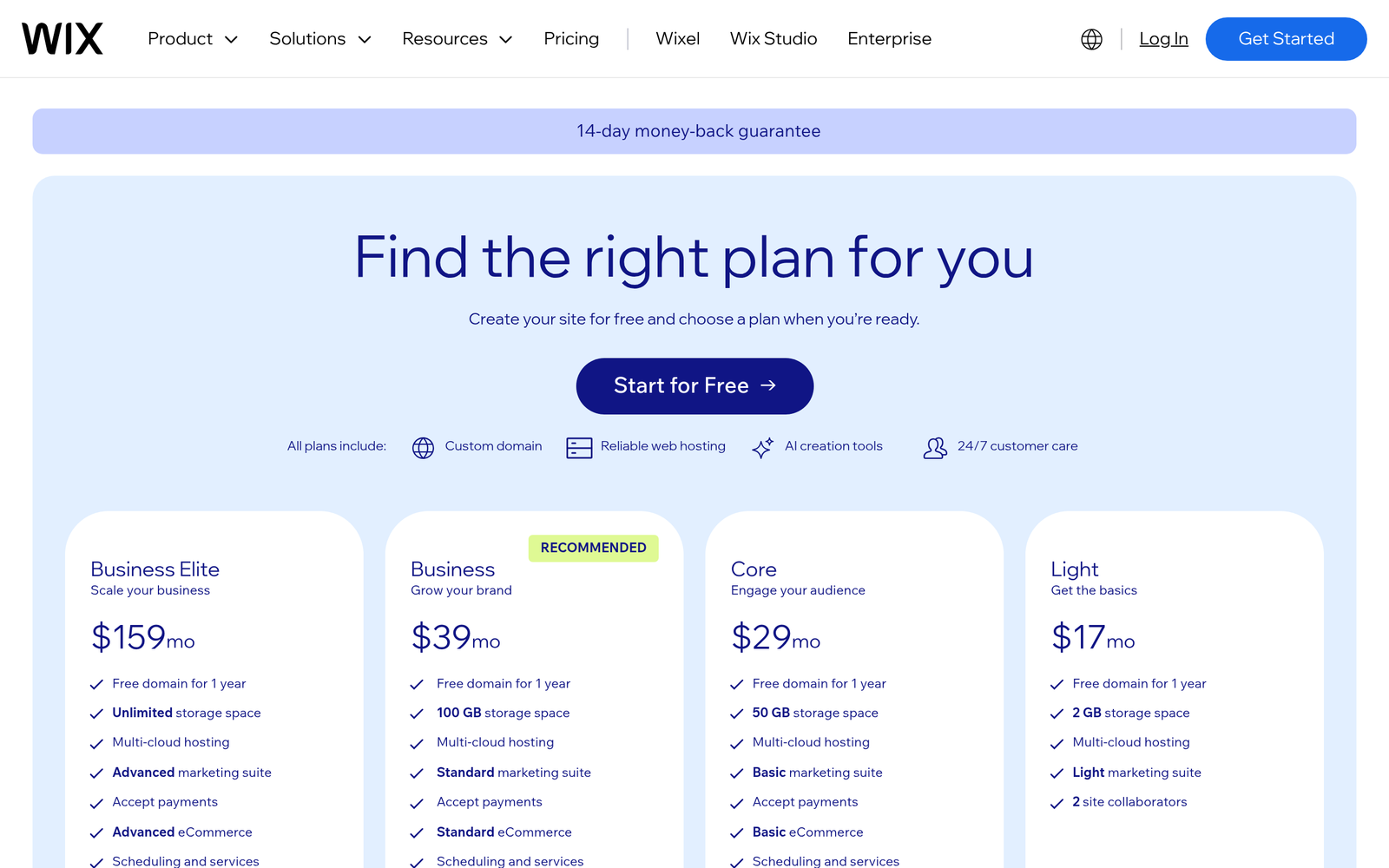
- Light: £9/month, Core: £16/month (annual billing)
- Business: £25/month, Business Elite: £119/month (annual billing)
On top of that you may pay for:
- Apps
- Custom domains
- Premium templates
Even so, it is affordable.
Note: If you choose Wix, pick a template designed for your industry, not the one that looks prettiest. A template built for service businesses will have the right page structure and CTAs already in place, saving you weeks of setup.
The costs are predictable and within reach of most small businesses.
Where Wix falls short
Wix can feel limiting when you need:
- Advanced SEO architecture
- Deep conversion testing
- Complex integrations
- Full design flexibility at scale
- Heavy customisation
Many UK businesses outgrow Wix when:
- Traffic increases
- Service lines expand
- SEO becomes competitive
- Marketing becomes multi-channel
Moving away from Wix later can be disruptive, so it is worth thinking about early.
Wix vs WordPress
Wix:
- Easier
- Lower setup friction
- Less technical management
WordPress:
- Greater flexibility
- Stronger SEO depth
- Full backend control
If building SEO authority over the long term is the goal, WordPress usually wins. If keeping things simple matters more, Wix does the job.
Wix vs Squarespace
Wix:
- More flexible drag-and-drop
- Broader app marketplace
Squarespace:
- More design consistency
- Cleaner template structure
Both are easy for beginners, and the choice often comes down to which designs you prefer.
The long-term question
Ask yourself where you expect the business to be in three years.
If you plan to:
- Dominate local search
- Invest heavily in SEO
- Build complex funnels
- Scale aggressively
If so, Wix may become restrictive.
If you plan to:
- Maintain a steady service business
- Rely on referrals
- Keep marketing simple
If so, Wix may be all you need.
The Whito view
Where Wix stops being enough
Wix makes building a website easy, but growing a business is still hard work.
If your website is:
- A simple credibility layer
- Supporting a referral-driven business
then Wix is fine.
If your website is:
- A core revenue engine
- SEO-led
- Built for scale
then think long term. Get the structure right first and choose the platform second.
Wix: Common questions before you commit
Is Wix good for a UK business website?
Yes, if you want to launch quickly without developers or technical setup. It’s best for brochure sites, local services, and early-stage businesses with simple offers.
Can Wix rank on Google in the UK?
It can rank for local and moderately competitive searches if the site structure, pages, and content are properly set up. If SEO is your main growth engine long-term, the platform can feel limiting compared to WordPress.
Is Wix e-commerce good enough?
It’s fine for small product ranges and service add-ons at low to mid volume. If products become central to revenue or you need advanced product SEO and filtering, Shopify is usually a better fit.
Will I outgrow Wix as I scale?
Many businesses outgrow it when they need deeper SEO architecture, conversion testing, or complex integrations. If your plan is steady growth with simple marketing, Wix can remain sufficient.
See how real UK businesses do this well
Our Stolen With Pride series looks at marketing that worked for real UK businesses, and what a smaller firm could copy from it. See how Surreal Cereal turned LinkedIn into a free marketing channel, how Bloom & Wild’s email opt-out built more loyalty than any campaign, and more.