Last Updated on April 7, 2026
Running a UK small business without a project management tool means things fall through the cracks. This guide compares the best project management tools UK small businesses are using in 2026 with honest recommendations.
Project management tools exist to replace chaos with clarity. Tasks get assigned. Deadlines get tracked. Nothing falls through the cracks because it was buried in an email thread from three weeks ago.
The challenge is choosing the right tool. Most are over-engineered for small teams. This guide compares the options that actually suit UK businesses with two to twenty employees.
Note: If your team is under five people, start with the free tier of any tool on this list. Do not pay for project management software until the free version genuinely limits you. Most small teams need task lists and deadlines, not Gantt charts and resource allocation.
Best Project Management Tools UK Businesses Compared
| Tool | Free Plan | Paid From | Best For | Key Strength |
|---|---|---|---|---|
| Trello | Yes (unlimited boards) | £5/user/mo | Visual thinkers, simple projects | Kanban boards, simplicity |
| Asana | Yes (up to 15 users) | £9/user/mo | Growing teams, structured workflows | Multiple views, project templates |
| ClickUp | Yes (unlimited) | £5/user/mo | Teams wanting one platform for everything | Feature depth, customisation |
| Monday.com | Yes (up to 2 users) | £9/user/mo | Non-technical teams, visual dashboards | Ease of use, visual reporting |
| Notion | Yes (generous) | £7/user/mo | Knowledge management + project tracking | Flexibility, documentation |
| Basecamp | No free plan | £13/user/mo | Client-facing project management | Client access, simplicity |
Trello: Best for Simplicity
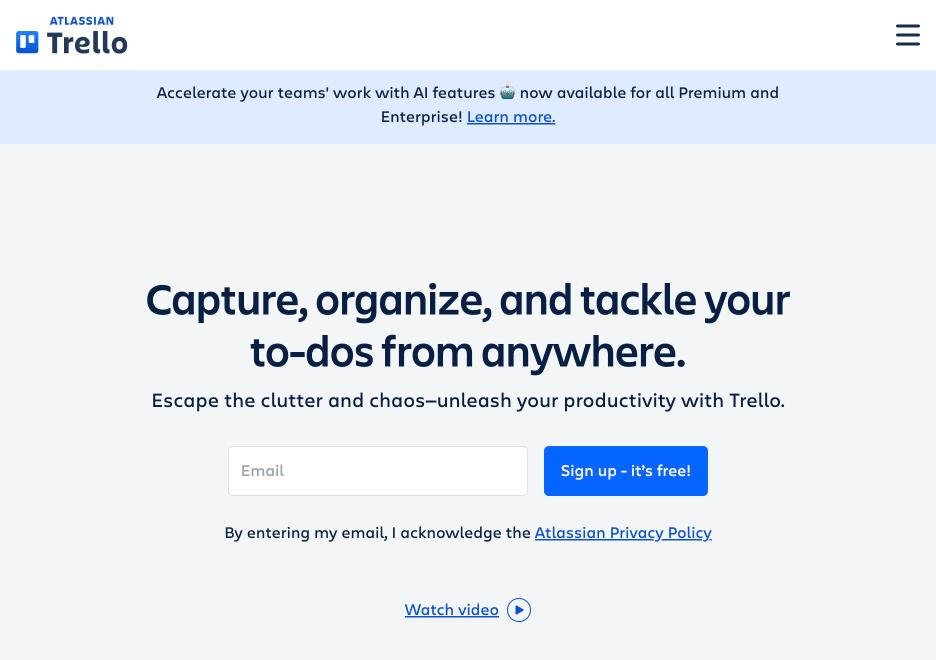
Trello uses a kanban board system. Cards move across columns representing stages. It is visually intuitive and requires zero training. For small teams with straightforward projects, Trello is often the only tool you need.
The best project management tools UK teams use combine task management, collaboration, and simple reporting.
It falls short when projects become complex. Dependencies, timelines, and resource management are limited. If your projects involve multiple phases, deadlines, and team coordination, you will outgrow Trello.
Asana: Best for Growing Teams
Asana bridges the gap between simplicity and power. It offers list views, board views, timeline views, and portfolios for managing multiple projects. The free plan supports up to 15 users, which is generous for a small business.
The learning curve is moderate. It takes a week or two for a team to adopt it properly. But once adopted, it becomes the central nervous system for task management and project tracking.
ClickUp: Best for Feature Depth
ClickUp tries to replace every other tool. Tasks, docs, goals, time tracking, whiteboards, chat, and dashboards are all built in. For teams that want consolidation, it is compelling.
The risk is complexity. ClickUp has so many features that it can overwhelm small teams. Start with only the list view and basic task management. Ignore everything else until you need it. Treated as a simple task manager, it works well. Treated as an everything-app, it creates noise.
Note: The tool you adopt is less important than the habit of using it. Every team needs to agree: if a task is not in the project management tool, it does not exist. This single rule transforms productivity more than any feature comparison.
How to Choose
For solo founders and micro teams of two to three, use Trello. For growing teams of five to fifteen, use Asana. For teams that want one platform for everything and do not mind complexity, use ClickUp. For teams that value visual dashboards and ease, use Monday.com. For teams that blend documentation with task management, use Notion.
The Bottom Line
Want a full marketing audit?
The Deep Audit reviews your entire marketing setup and gives you a prioritised action plan with UK cost benchmarks. One-off fee. Money-back guarantee.
Get Your Deep Audit