Last Updated on April 7, 2026
AI has changed marketing for small businesses. But with hundreds of tools launching every month, it is hard to know which ones are worth paying for. These are the AI marketing tools UK small businesses are actually finding useful in 2026.
The AI marketing landscape is noisy. Every tool claims to automate your marketing, generate content at scale, and replace your agency. Most of them produce mediocre output that still needs heavy editing, or automate tasks that were not worth doing in the first place.
This guide cuts through the noise. These are the AI tools that actually help UK small businesses save time and improve quality, tested against real-world marketing tasks.
Note: AI tools are assistants, not replacements. They accelerate work that a human directs. If you do not know what good marketing looks like, an AI tool will not teach you. It will just help you produce mediocre content faster. Learn the fundamentals first. Use AI to scale what already works.
Top AI Marketing Tools UK Businesses Are Using
| Tool | Primary Use | Starting Price | Best For |
|---|---|---|---|
| ChatGPT (OpenAI) | Content drafting, brainstorming, research | Free / £20/mo for Plus | General-purpose writing and ideation |
| Claude (Anthropic) | Long-form content, analysis, strategy | Free / £18/mo for Pro | Detailed writing, complex analysis |
| Jasper | Marketing copy at scale | £39/mo | Teams needing brand-consistent copy |
| Canva AI | Design generation and editing | Free (limited) / £10/mo Pro | Quick social media graphics, presentations |
| Surfer SEO | AI-assisted SEO content optimisation | £69/mo | Content teams optimising for search |
| Descript | AI video and podcast editing | Free (limited) / £22/mo | Video content, podcast production |
| Grammarly | Writing quality and tone | Free / £12/mo Premium | Proofreading, brand voice consistency |
ChatGPT and Claude: The All-Rounders
For most UK small businesses, a general-purpose AI assistant is the most useful starting point. ChatGPT and Claude can both draft blog posts, write email sequences, brainstorm content ideas, summarise research, create social media captions, and help with strategic thinking.
The most effective AI marketing tools UK businesses use focus on content creation, SEO, and data analysis.
The free tiers of both are surprisingly capable. The paid versions offer faster responses, more sophisticated reasoning, and longer context windows for complex tasks.
The key to getting good output is good input. Vague prompts produce vague content. Specific briefs with context about your audience, tone, and goals produce usable drafts that need minimal editing.
Canva AI: Design Without a Designer
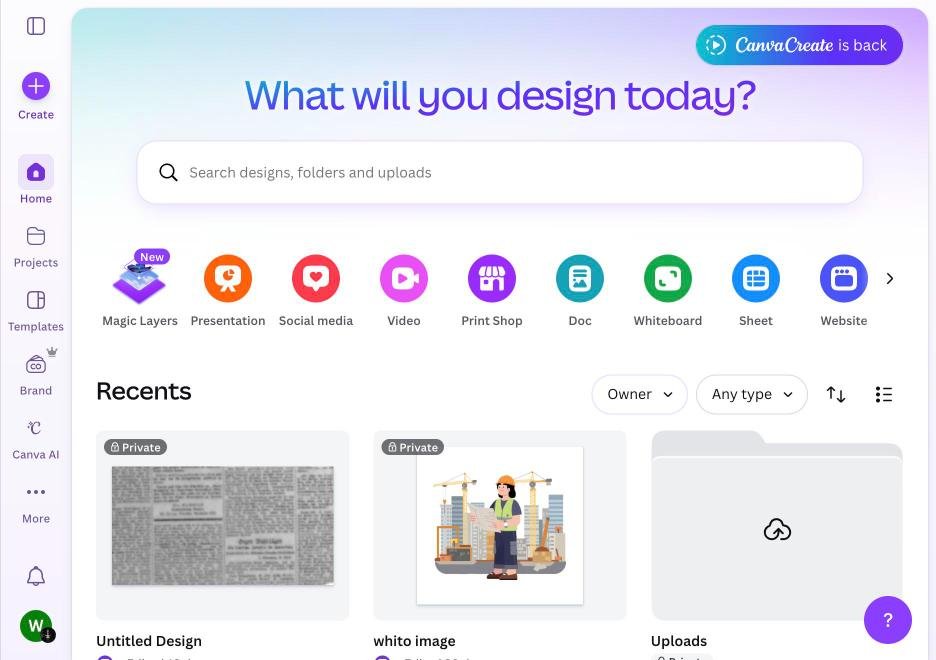
Canva has integrated AI features throughout its platform. Magic Design generates layouts from text prompts. Background removal and image generation are built in. For UK businesses without a graphic designer, Canva AI turns basic ideas into professional-looking social media posts, presentations, and marketing materials in minutes.
The free tier handles most basic needs. Pro at £10 per month unlocks brand kits, premium templates, and full AI features. For the quality of output, it is exceptional value.
Surfer SEO: AI-Guided Content Optimisation
Surfer analyses top-ranking content for your target keywords and provides a content score based on structure, keyword usage, and comprehensiveness. Its AI writing assistant can generate content outlines and drafts optimised for specific search terms.
It is most useful for businesses that publish regular SEO content and want to ensure each piece is structured to compete. At £69 per month, it is a serious investment for small businesses but pays for itself if you are producing two or more SEO-focused articles per month.
Where AI Tools Fall Short
AI tools struggle with genuine expertise and original thinking. They can assemble information but they cannot share first-hand experience or form novel opinions. Content that relies on your specific knowledge, industry insight, or client stories cannot be fully automated.
They also produce content that can sound generic if not carefully directed. The risk of AI-generated content is not that it is bad. It is that it sounds like everything else. Differentiation still requires a human perspective.
Note: Google has stated that AI-generated content is not inherently penalised, but content must demonstrate experience, expertise, authoritativeness, and trustworthiness (E-E-A-T). Generic AI output that adds nothing new to a topic will struggle to rank. Always add your own expertise and perspective.
How to Start Using AI in Your Marketing
Start with one tool. ChatGPT or Claude, free tier. Use it for one specific task: drafting email newsletters, creating social media captions, or brainstorming blog topics. Get comfortable with prompting. Develop a workflow. Then expand to other tools as specific needs arise.
Do not buy five AI subscriptions at once. Most of the value comes from one general-purpose tool used well, not five specialist tools used poorly.
The Bottom Line
Want a full marketing audit?
The Deep Audit reviews your entire marketing setup and gives you a prioritised action plan with UK cost benchmarks. One-off fee. Money-back guarantee.
Get Your Deep Audit