Last Updated on April 7, 2026
Social media for UK small businesses is one of the most discussed marketing topics, yet most small business owners get it wrong. They spread themselves across every platform, post inconsistently, and wonder why nothing works.
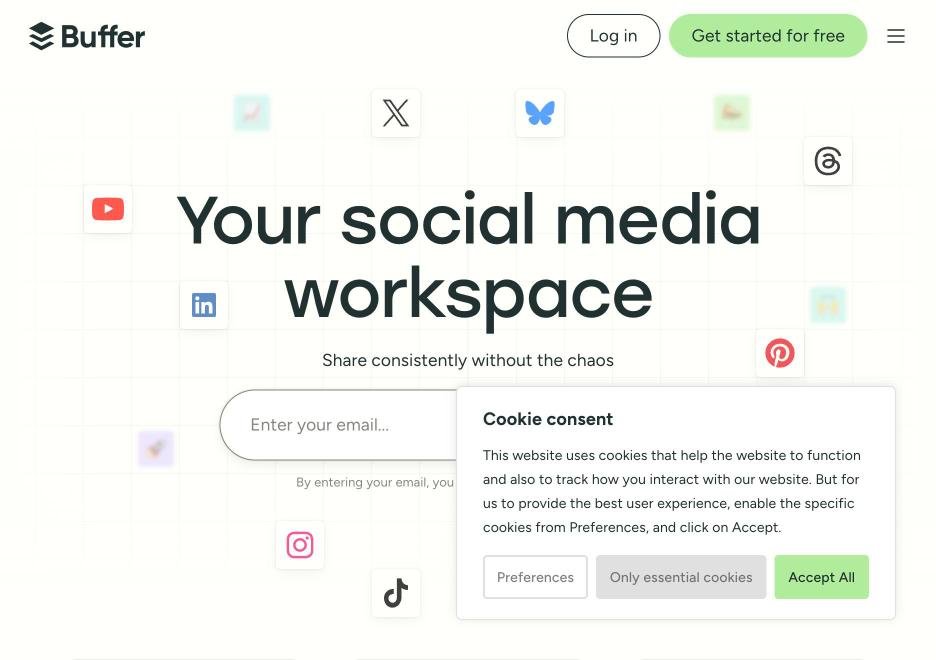 social media management tool for scheduling content” class=”wp-image-5240″/>
They post because they feel they should. They chase followers because the number feels important. They spend hours creating content that generates likes but not leads.
Social media can work for UK businesses. But only when it is connected to a commercial outcome. If it is not generating enquiries, building trust, or supporting sales, it is a hobby with a business account.
Organic social media reach has collapsed. On Facebook, a business page reaches roughly 2-5% of its followers per post. On Instagram, slightly more. On LinkedIn, engagement rates are higher but still declining year on year.
The best social media for UK small businesses strategy is one you can actually maintain consistently.
This means that if you have 1,000 followers, maybe 30 to 50 people see each post. Of those, a fraction will engage. Of those, almost none will click through to your website. Of those, even fewer will enquire.
The maths does not work for most small businesses unless they are strategic about it.
Which Platforms Actually Work for UK Businesses
LinkedIn is the strongest platform for B2B businesses, professional services, and anyone selling to other businesses. Decision-makers are there. The content is professional. The intent is commercial. If you sell to businesses, LinkedIn is your primary social platform.
Instagram works for visually-driven businesses. Interior design, food, fashion, fitness, property, trades with visual portfolios. If your work photographs well and your audience is under 45, Instagram is worth investing in.
Facebook still has the largest UK audience but organic reach is minimal. It is most useful for local businesses using Facebook Groups, community engagement, and local advertising. The platform itself is a pay-to-play advertising channel more than an organic one.
TikTok has explosive reach potential but suits businesses with personality-driven content, visual demonstration, or entertainment value. For most professional service firms, it is not the right fit. For consumer brands, local businesses with character, or businesses targeting younger demographics, it can work.
X (Twitter) has declining UK business relevance. Unless you are in media, politics, tech, or commentary-driven industries, the return on time is low for most SMEs.
Note: Check your Google Analytics before investing heavily in social media. If social media currently drives less than 5% of your website traffic and enquiries, other channels like SEO or Google Ads are likely to deliver a better return on your time and budget.
Choose one platform. Maybe two. Not four. Spreading yourself thin across every platform means doing none of them well. Pick the platform where your customers actually spend time and commit to it properly.
Post consistently, not constantly. Three quality posts per week beats seven mediocre ones. Consistency builds trust. Volume creates noise. A posting schedule you can maintain for six months is better than a burst of daily content that dies after three weeks.
Focus on value, not promotion. The 80/20 rule works here. Eighty percent of your content should educate, inform, or entertain. Twenty percent can promote your services. If every post is a sales pitch, people stop paying attention.
Use social media to build trust, not generate direct leads. For most UK businesses, social media supports the sales process rather than starting it. Someone finds you through Google, visits your website, then checks your social media to see if you are credible and active. If your last post was six months ago, that hurts trust.
Repurpose content. A blog post becomes five social media posts. A customer testimonial becomes a case study graphic. A frequently asked question becomes a short video. You do not need to create original content for every post. You need to repackage your existing knowledge.
For direct lead generation, paid social advertising is more effective than organic posting. Facebook and Instagram ads can target specific demographics, locations, and interests. LinkedIn ads can target job titles, industries, and company sizes.
If your goal is enquiries, a small paid budget of £300 to £500 per month on targeted ads will typically outperform months of organic posting. Organic builds presence and trust. Paid drives action.
The smart approach is both. Organic content keeps your profile active and credible. Paid campaigns drive targeted traffic when you need specific outcomes.
What Not to Do
Do not buy followers. Fake followers destroy engagement rates and credibility. Anyone who checks can tell.
Do not automate everything. Scheduled posting is fine. Automated replies and engagement feel robotic and damage trust.
Do not measure success by followers. A business page with 500 engaged followers who buy is worth more than 50,000 followers who never click. Engagement rate and click-through rate matter. Follower count does not.
Do not ignore comments and messages. Social media is a conversation, not a broadcast. If someone comments or messages, respond promptly. Ignored messages become lost enquiries.
The Bottom Line
Want a full marketing audit?
The Deep Audit reviews your entire marketing setup and gives you a prioritised action plan with UK cost benchmarks. One-off fee. Money-back guarantee.
Get Your Deep Audit