Last Updated on April 6, 2026
If you run a UK business and have not properly set up your Google Business Profile UK listing, you are invisible in local search. Most businesses either ignore it or set it up once and forget it. Both are expensive mistakes.
Both are expensive mistakes.
Google Business Profile is not a directory listing. It is your most visible local asset. When someone searches for what you do, in your area, your profile appears before your website does.
If it is incomplete, outdated, or poorly optimised, you lose enquiries to competitors who bothered.
This guide covers setup, optimisation, and ongoing management for UK businesses. No fluff. Just what works.
Note: If you serve customers in a specific area, Google Business Profile should be optimised before investing in SEO, ads, or social media. It is free, it appears above organic results, and for local searches it influences more buying decisions than your website.
Why Your Google Business Profile UK Listing Matters
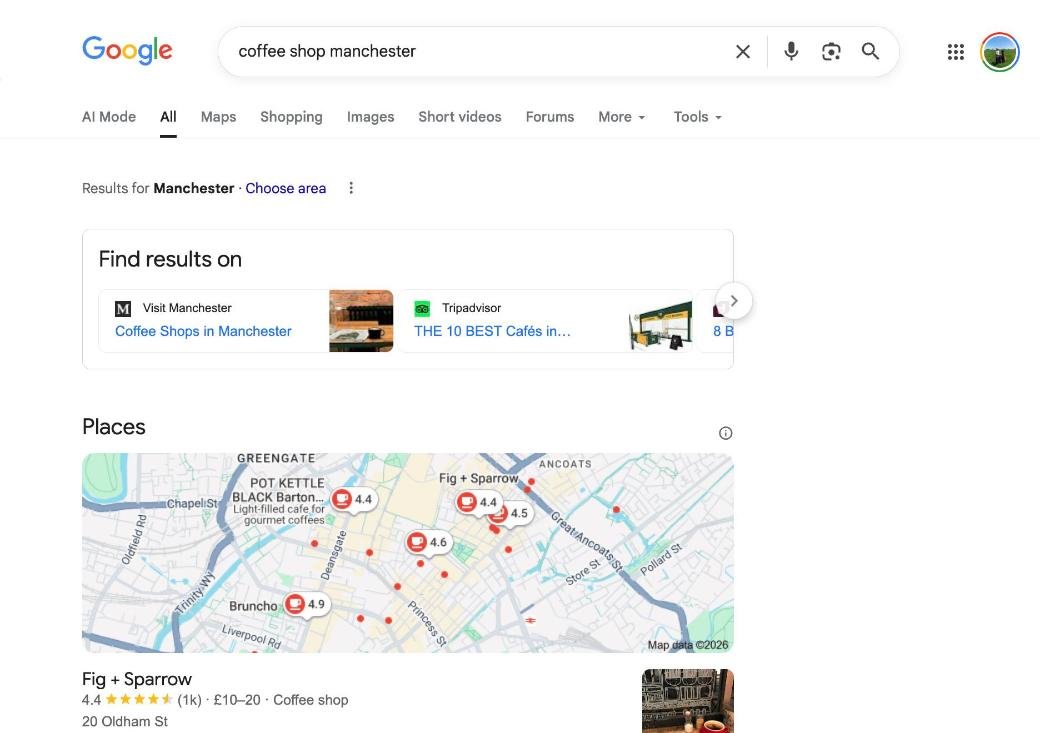
Google Business Profile controls what appears in the local pack. That is the map section at the top of search results when someone types “accountant near me” or “plumber in Leeds.”
The local pack appears above organic results. It gets the first click. If you are not in it, you are invisible for the searches that matter most.
Setting Up Your Profile Properly
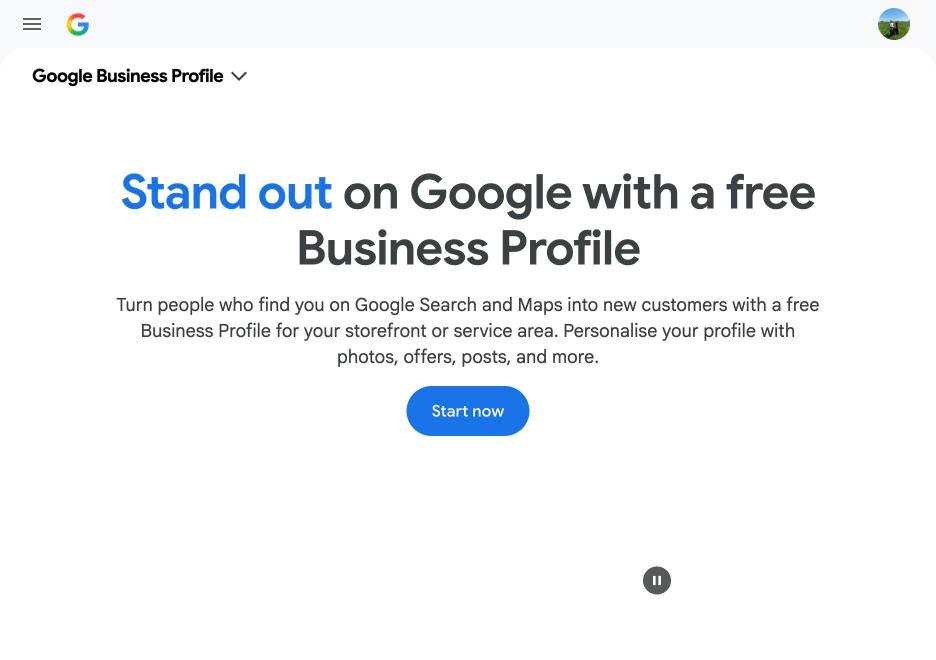
If you have not claimed your profile, start at business.google.com. Google will verify your business via postcard, phone, or email depending on category.
The basics matter more than most guides admit. Get these right first.
Business name. Use your real trading name. Do not stuff keywords into it. Google penalises this and it looks unprofessional. “Smith Plumbing” is correct. “Smith Plumbing – Best Emergency Plumber London 24/7” will get you flagged.
Primary category. Choose the most specific category that matches what you do. “Solicitor” is better than “Legal Services.” “Roofing Contractor” is better than “Construction Company.” Your primary category has the single biggest impact on which searches you appear for.
Secondary categories. Add every relevant category. If you are a firm of solicitors handling family law, conveyancing, and wills, add all three as secondary categories.
Address and service area. If customers visit you, show your address. If you visit customers, set a service area and hide your address. Do not do both unless you genuinely operate both ways.
Phone number. Use a local number, not a mobile if possible. A landline or VoIP number with a local area code builds trust. Make sure it matches the number on your website exactly.
Website URL. Link to your homepage or a dedicated landing page. Not a social media profile.
Opening hours. Keep these accurate. Update them for bank holidays. Google checks, and inconsistent hours hurt your ranking and frustrate customers.
Optimising Your Profile for Local Search
Setup is not optimisation. Most businesses stop at setup. That is why most businesses do not rank in the local pack.
Business description. You get 750 characters. Use them. Explain what you do, who you serve, and where you operate. Write for humans, not search engines. Include your location and services naturally. Do not keyword stuff.
Services and products. Add every service you offer with a description. Google uses this data to match searches. If you offer “loft conversions” but only list “building services,” you will not appear for the specific search.
Posts. Google Business Profile lets you publish posts. Use them. Share updates, offers, completed projects, or useful tips. Posts expire after seven days, so consistency matters. One post per week is enough.
Q&A section. Seed your own questions. Ask and answer the five most common questions customers ask you. If you do not, random people on Google will answer for you, and they will get it wrong.
Reviews: The Most Important Ranking Factor You Control
Google reviews directly affect your local ranking. More importantly, they affect whether someone clicks on your listing or your competitor’s.
You do not need hundreds. You need consistent, recent, genuine reviews.
Ask every customer. After a completed job or service, send a direct link to your review page. Make it easy. The link format is simple and you can create a short URL to share via text or email.
Respond to every review. Positive or negative. This shows Google you are active and shows potential customers you care. Keep responses professional and brief.
Never buy reviews. Google detects fake reviews and will penalise your listing. It is not worth the risk. One flagged review campaign can undo months of genuine work.
Handle negative reviews properly. Respond calmly. Acknowledge the concern. Offer to resolve it offline. Never argue publicly. A professional response to a negative review often impresses potential customers more than five stars with no replies.
NAP Consistency: The Technical Foundation
NAP stands for Name, Address, Phone number. Yours must be identical everywhere it appears online. Your website. Your Google Business Profile. Yell. Thomson Local. Facebook. Industry directories.
Even small differences matter. “St.” versus “Street.” “Ltd” versus “Limited.” Different phone formats. Google uses NAP consistency as a trust signal. Inconsistency creates doubt.
Audit your listings. Fix discrepancies. This is tedious but high-impact work.
Local Citations That Actually Matter
A citation is any online mention of your business name, address, and phone number. They reinforce your legitimacy to Google.
Focus on quality over quantity. For UK businesses, the citations that matter most are Yell, Thomson Local, FreeIndex, Yelp UK, Facebook, Bing Places, Apple Maps, and any industry-specific directories relevant to your sector.
If you are a solicitor, get listed on the Law Society directory. If you are a tradesperson, Checkatrade and TrustATrader matter. If you are an accountant, ICAEW or AAT directories are valuable.
Do not waste time on hundreds of low-quality directories. Ten strong, relevant citations beat a hundred weak ones.
Ongoing Management: What to Do Monthly
Google Business Profile is not a set-and-forget asset. The businesses that rank highest treat it as a living channel.
Monthly tasks that take less than an hour but make a measurable difference: publish at least four Google posts, upload new photos of recent work or projects, respond to all new reviews, check and answer any new questions in the Q&A section, verify your opening hours are current, review your profile insights to see which searches are driving views.
Profile insights tell you which search terms people use to find you, how many people requested directions, and how many called you directly from the listing. This is free data. Use it.
Common Mistakes UK Businesses Make
Common Mistakes
- Keyword-stuffed business names
- Primary category too broad or wrong
- No photos on the listing
- Ignoring or not responding to reviews
- Duplicate listings left active after moves
What To Do Instead
- Use your real registered business name
- Pick a specific primary category, review quarterly
- Upload real photos of your work, team, and premises
- Respond to every review, positive and negative
- Find and merge or remove old duplicate listings
Inconsistent opening hours. Especially around Christmas, Easter, and bank holidays. Customers who arrive to find you closed when Google said you were open do not come back.
What a Well-Optimised Profile Looks Like
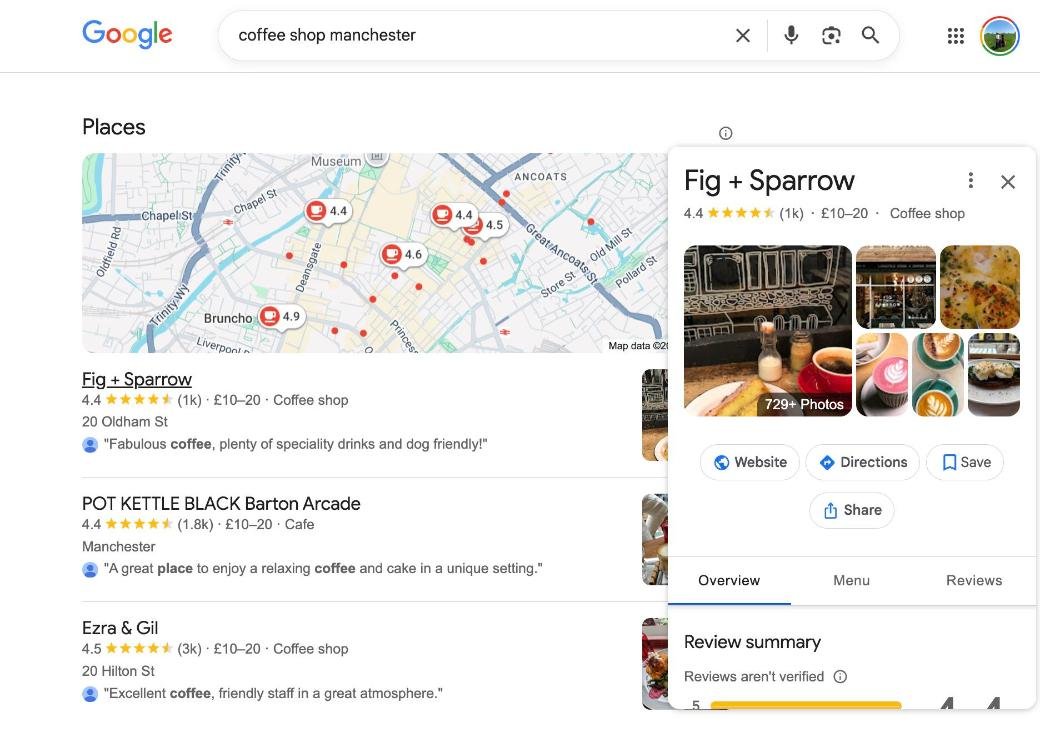
A profile that generates consistent enquiries typically has a specific primary category with multiple relevant secondaries, a complete business description using all 750 characters, at least 20 genuine photos showing real work and real people, 15 or more reviews with an average above 4.5, owner responses on every review, weekly posts with updates or tips, a complete services section with descriptions, accurate hours including special hours for holidays, and consistent NAP details matching the website exactly.
That is not complicated. It just requires consistency.
The Bottom Line
Google Business Profile is free. It sits at the top of local search results. It influences more buying decisions than your website for local searches.
If you are a UK business that serves a local or regional area and your profile is incomplete, that is the first thing to fix. Before ads. Before SEO. Before social media.
Fix your Google Business Profile. Then build everything else on top of it.
Want a full marketing audit?
The Deep Audit reviews your entire marketing setup and gives you a prioritised action plan with UK cost benchmarks. One-off fee. Money-back guarantee.
Get Your Deep Audit