
Last Updated on March 30, 2026
Wix is easy.
That is its appeal.
Drag.
Drop.
Publish.
For many UK businesses, that feels perfect.
The question is:
Is it easy enough when growth becomes serious?
What Wix Actually Is
Wix is a hosted website builder.
It includes:
- Templates
- Hosting
- Basic SEO settings
- E-commerce functionality
- App marketplace
It is built for simplicity.
Not deep technical control.
Where Wix Is Strong
For early-stage UK businesses, Wix works well for:
- Brochure websites
- Local service pages
- Small e-commerce stores
- Quick launches
- Founder-led builds
You can launch fast.
Without developers.
That matters at the start.
Ease of Use
Wix’s main advantage:
Low friction.
No hosting setup.
No plugin management.
No code required.
If speed is the priority, Wix delivers.
Wix in Practice: A Real UK Business Example
A Cardiff-based physiotherapy clinic wants a simple website.
They rely mostly on referrals.
They need credibility.
Online bookings would help.
They do not need complex funnels.
They do not plan to run national SEO campaigns.
They just need to look professional and be easy to find locally.
What Wix Shows Them
They build the site themselves.
Template chosen.
Pages added.
Services listed.
Booking app connected.
Within a week, they are live.
No developer.
No hosting setup.
No plugin conflicts.
They connect Google Business Profile.
They optimise pages for:
“physiotherapist Cardiff”
“sports injury clinic Cardiff”
Within months, they rank locally.
Appointments increase steadily.
For their stage, Wix works.
It removes friction at the start.
What Changes Over Time
Two years later, the clinic expands.
They add:
Shockwave therapy.
Corporate wellness services.
Rehabilitation programmes.
Now they want:
Dedicated landing pages.
Content targeting specific injury types.
Stronger SEO structure.
They start to feel constraints.
URL structure is less flexible.
Blog architecture is basic.
Advanced SEO tweaks require workarounds.
Nothing is broken.
But growth is now more deliberate.
The platform that felt simple begins to feel limiting.
The Honest Caveat
Wix is not the wrong choice.
It is a stage choice.
For a referral-led, local service business, it can be more than enough.
For a clinic planning to dominate regional search with layered content and aggressive SEO, it may create long-term friction.
Wix makes launching easy.
Scaling strategically is a different challenge.
The question is not whether Wix works.
It is how far you expect the business to go.
SEO Capabilities (UK Context)
Wix has improved significantly.
It now supports:
- Custom meta titles and descriptions
- Editable URLs
- Structured data (limited)
- Mobile optimisation
- XML sitemaps
In local and moderate-competition markets, it can rank.
But it has limitations:
- Less control over advanced technical SEO
- Restricted backend flexibility
- Limited architecture depth
If SEO is your main growth engine, it may feel constrained over time.
Ecommerce on Wix
Wix ecommerce is suitable for:
- Small product ranges
- Service add-ons
- Low to mid volume stores
It is not ideal for:
- Large catalogues
- Advanced filtering
- High-growth ecommerce brands
If products become central to revenue, Shopify is usually stronger.
Pricing (UK Reality)
Expect roughly:
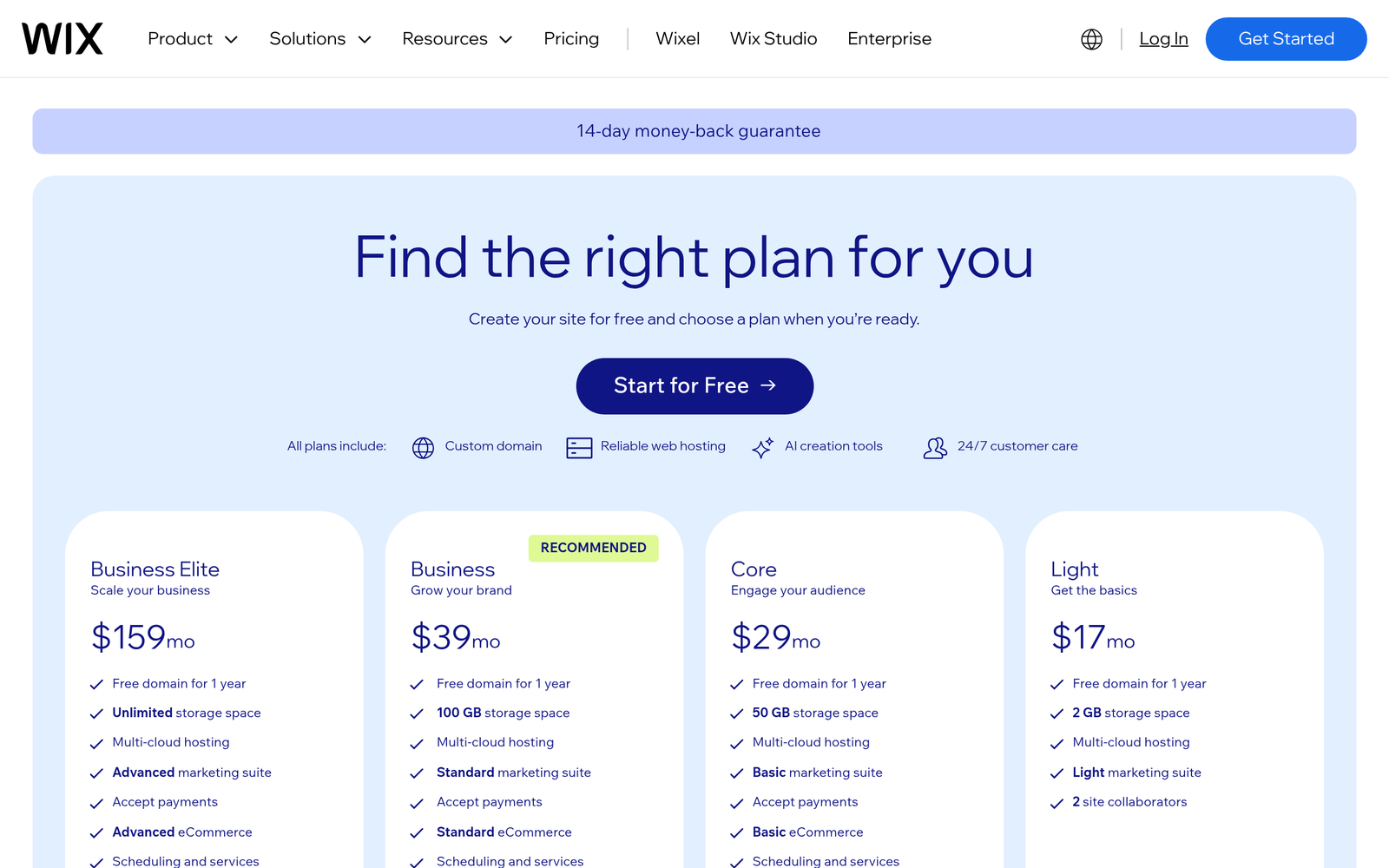
- Basic plans: £8–£15 per month
- Business/ecommerce plans: £15–£30+ per month
Plus optional:
- Apps
- Custom domains
- Premium templates
Affordable.
Note: If you choose Wix, pick a template designed for your industry, not the one that looks prettiest. A template built for service businesses will have the right page structure and CTAs already in place, saving you weeks of setup.
Predictable.
Accessible.
Where Wix Falls Short
Wix can feel limiting when you need:
- Advanced SEO architecture
- Deep conversion testing
- Complex integrations
- Full design flexibility at scale
- Heavy customisation
Many UK businesses outgrow Wix when:
- Traffic increases
- Service lines expand
- SEO becomes competitive
- Marketing becomes multi-channel
Migration later can be disruptive.
Wix vs WordPress
Wix:
- Easier
- Lower setup friction
- Less technical management
WordPress:
- Greater flexibility
- Stronger SEO depth
- Full backend control
If long-term SEO authority is the goal, WordPress often wins.
If simplicity is the goal, Wix works.
Wix vs Squarespace
Wix:
- More flexible drag-and-drop
- Broader app marketplace
Squarespace:
- More design consistency
- Cleaner template structure
Both are beginner-friendly.
Choice often comes down to design preference.
The Long-Term Question
Ask yourself:
Where do we expect this business to be in 3 years?
If you plan to:
- Dominate local search
- Invest heavily in SEO
- Build complex funnels
- Scale aggressively
Wix may become restrictive.
If you plan to:
- Maintain a steady service business
- Rely on referrals
- Keep marketing simple
It may be sufficient.
The Whito View
Final Thought
Wix is easy.
Growth is not.
If your website is:
- A simple credibility layer
- Supporting a referral-driven business
Wix is fine.
If your website is:
- A core revenue engine
- SEO-led
- Built for scale
Think long term.
Structure first.
Platform second.
Wix: Common Questions Before You Commit
Is Wix good for a UK small business website?
Yes, if you want to launch quickly without developers or technical setup. It’s best for brochure sites, local services, and early-stage businesses with simple offers.
Can Wix rank on Google in the UK?
It can rank for local and moderately competitive searches if the site structure, pages, and content are properly set up. If SEO is your main growth engine long-term, the platform can feel limiting compared to WordPress.
Is Wix e-commerce good enough?
It’s fine for small product ranges and service add-ons at low to mid volume. If products become central to revenue or you need advanced product SEO and filtering, Shopify is usually a better fit.
Will I outgrow Wix as I scale?
Many businesses outgrow it when they need deeper SEO architecture, conversion testing, or complex integrations. If your plan is steady growth with simple marketing, Wix can remain sufficient.