Last Updated on March 30, 2026
Most CRMs promise everything.
Automation.
AI.
Enterprise power.
All-in-one ecosystems.
Pipedrive promises something simpler.
Note: Pipedrive is the best first CRM for UK service businesses with 1 to 10 employees. It does one thing well: pipeline management. If you need email marketing, landing pages, or complex automation, you will need additional tools alongside it.
Pipeline clarity.
The question is:
Is it simple enough as you scale?
Note: Pipedrive scales well to about 5 to 10 salespeople. Beyond that, businesses typically outgrow it and move to HubSpot or Salesforce. If you expect rapid team growth, factor migration costs into your decision now.
What Pipedrive Is Built For
Pipedrive is sales-first.
Not marketing-first.
It focuses on:
- Visual deal pipelines
- Activity tracking
- Sales forecasting
- Contact management
- Basic automation
It is designed for teams that sell actively.
Not for complex inbound automation stacks.
Where Pipedrive Is Strong
For UK businesses with active sales processes, Pipedrive excels at:
- Clear deal stages
- Drag-and-drop pipeline management
- Activity reminders
- Sales accountability
- Easy reporting
It makes pipeline visibility obvious.
That alone improves close rates.
Ease of Use
One of Pipedrive’s biggest advantages:
It is intuitive.
Minimal setup friction.
Clean interface.
Quick onboarding.
Sales teams actually use it.
Adoption beats complexity.
Pipedrive in Practice: A Real UK Business Example
A Manchester-based recruitment agency regularly places candidates. Decent revenue. A small sales team. But deals are falling through the cracks, follow-ups are missed, and nobody can tell which consultant is performing or why.
They are busy. Not productive.
What Pipedrive Shows Them
They set up a five-stage pipeline in an afternoon.
Within days, the whole picture is visible. Two warm candidates have been sitting untouched for three weeks. One consultant has twelve open deals, but no activity logged against any of them. The highest-value clients are getting the least attention.
None of this was obvious before.
That is not a people problem. That is a visibility problem.
What They Do Next
They define clear pipeline stages. They set mandatory activity reminders. Every call and meeting gets logged.
Within 60 days, close rates improve. Not because the team got better overnight. Because nobody could hide from an empty pipeline anymore.
No complex automation. No expensive upgrade. Just a simple system used consistently.
The Honest Caveat
Pipedrive does not make your team sell better.
It makes it impossible to pretend they are.
Someone still needs to review the pipeline weekly, hold the team accountable, and act on what the data shows. A CRM that nobody checks is just an expensive contacts list.
That discipline comes first. The tool supports it.
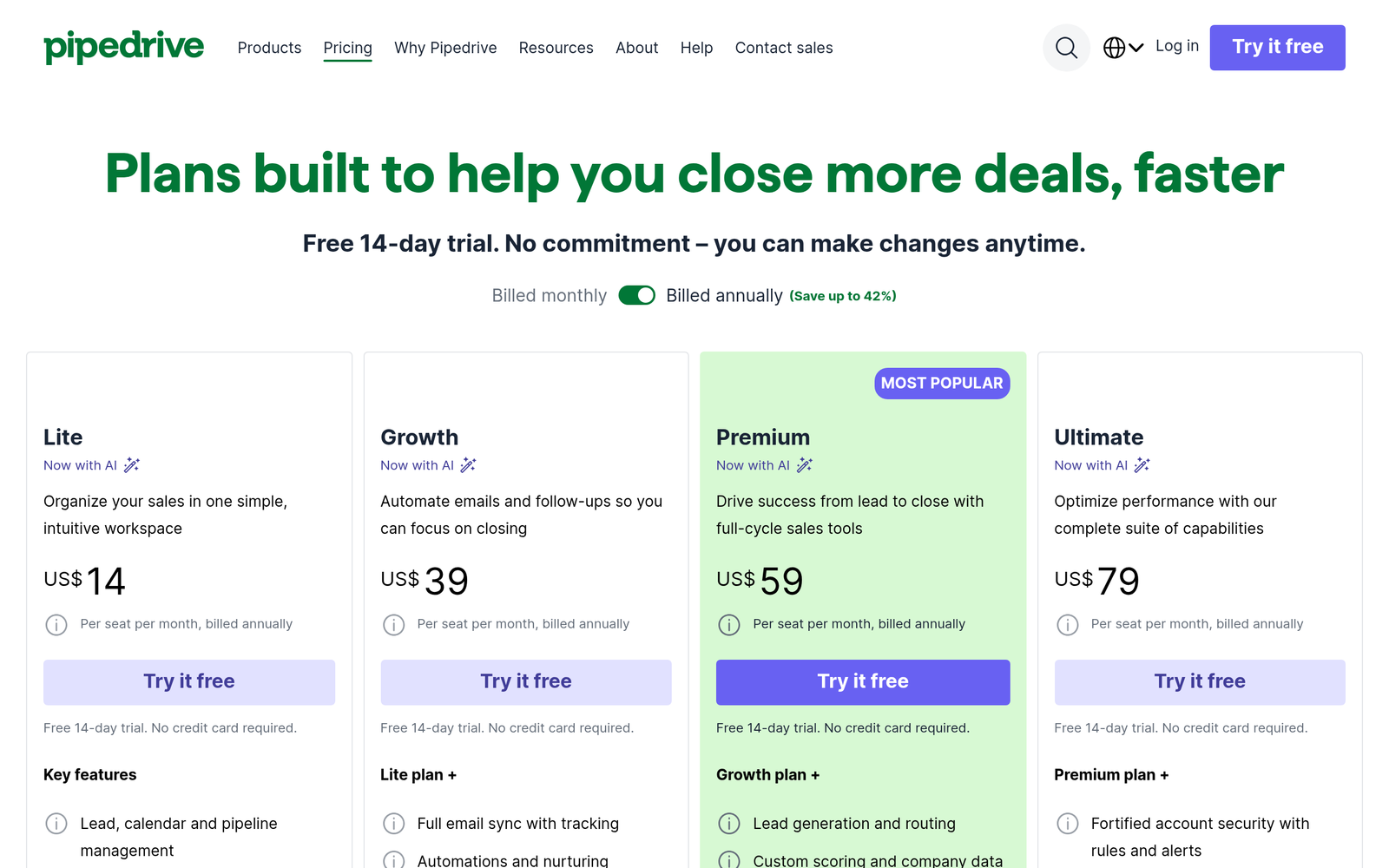
Pricing (UK Context)
Typical pricing tiers:
- Entry plans: £15–£25 per user/month
- Mid-tier plans: £30–£50 per user/month
- Higher tiers with automation: £50+ per user/month
Where Pipedrive Falls Short
Pipedrive is not a full marketing suite.
It has:
- Limited built-in marketing automation
- No deep content management
- Fewer advanced inbound tools
If your growth model relies heavily on:
- Automated email nurturing
- Complex lifecycle tracking
- Multi-channel marketing attribution
You may need integrations.
Or a more marketing-centric CRM.
Pipedrive vs HubSpot
Pipedrive:
- Simpler
- Sales-focused
- Lower entry cost
- Easier to adopt
HubSpot:
- Stronger marketing automation
- Deeper reporting
- Broader ecosystem
- Higher scaling cost
If you need sales clarity first, Pipedrive is often enough.
If you need marketing-sales integration at scale, HubSpot may win.
Pipedrive vs Zoho
Pipedrive:
- Cleaner user experience
- Faster setup
Zoho:
- More customisation
- Broader tool suite
- Slightly steeper learning curve
Zoho can be more flexible.
Pipedrive is often easier.
Does Pipedrive Actually Scale?
It scales well for:
- Service-based businesses
- B2B firms
- Recruitment agencies
- Consultants
- Sales-driven organisations
It may struggle if:
- You require enterprise-level customisation
- You need deep marketing automation
- Your reporting needs are highly complex
For most growing UK businesses, it scales far enough.
Beyond that, complexity usually increases across the whole business.
Not just CRM.
The Real Risk
The risk with Pipedrive is not limitation.
It is complacency.
If you:
- Do not define pipeline stages
- Do not enforce activity tracking
- Do not monitor close rates
- Do not review forecasts
Even the best CRM becomes cosmetic.
Process discipline determines scale.
Who Should Choose Pipedrive
Choose Pipedrive if:
- You want clarity over complexity
- You have an active sales team
- You need pipeline visibility
- You want quick adoption
- You prefer simplicity over feature overload
Avoid it if:
- Marketing automation is central
- You need deep lifecycle segmentation
- You want a full marketing ecosystem
The Whito View
Pipedrive: Common Questions Before You Commit
Is Pipedrive good for a UK small business?
Yes, especially if you have an active sales process and need clear pipeline visibility. It’s built for teams that sell consistently, not for heavy marketing automation.
Does Pipedrive replace marketing software?
No, it’s sales-first and light on built-in marketing automation. If lifecycle email, attribution, and content marketing are central to your strategy, you’ll likely need integrations.
Is Pipedrive better than HubSpot?
It’s simpler, easier to adopt, and lower cost at entry level. HubSpot offers deeper marketing tools and reporting, but with greater complexity and higher scaling costs.
Will Pipedrive scale as we grow?
For most service and B2B businesses, yes. If you require enterprise-level customisation or advanced marketing ecosystems, you may eventually outgrow it.