Last Updated on April 2, 2026
Most UK businesses treat hosting like a tick-box.
Buy hosting.
Install WordPress.
Hope it’s fast.
Cloudways promises something different.
Managed cloud hosting.
Performance optimisation.
No server headaches.
The question is not whether it works.
The question is whether you need it.
Cheap hosting saves money.
Slow hosting loses enquiries.
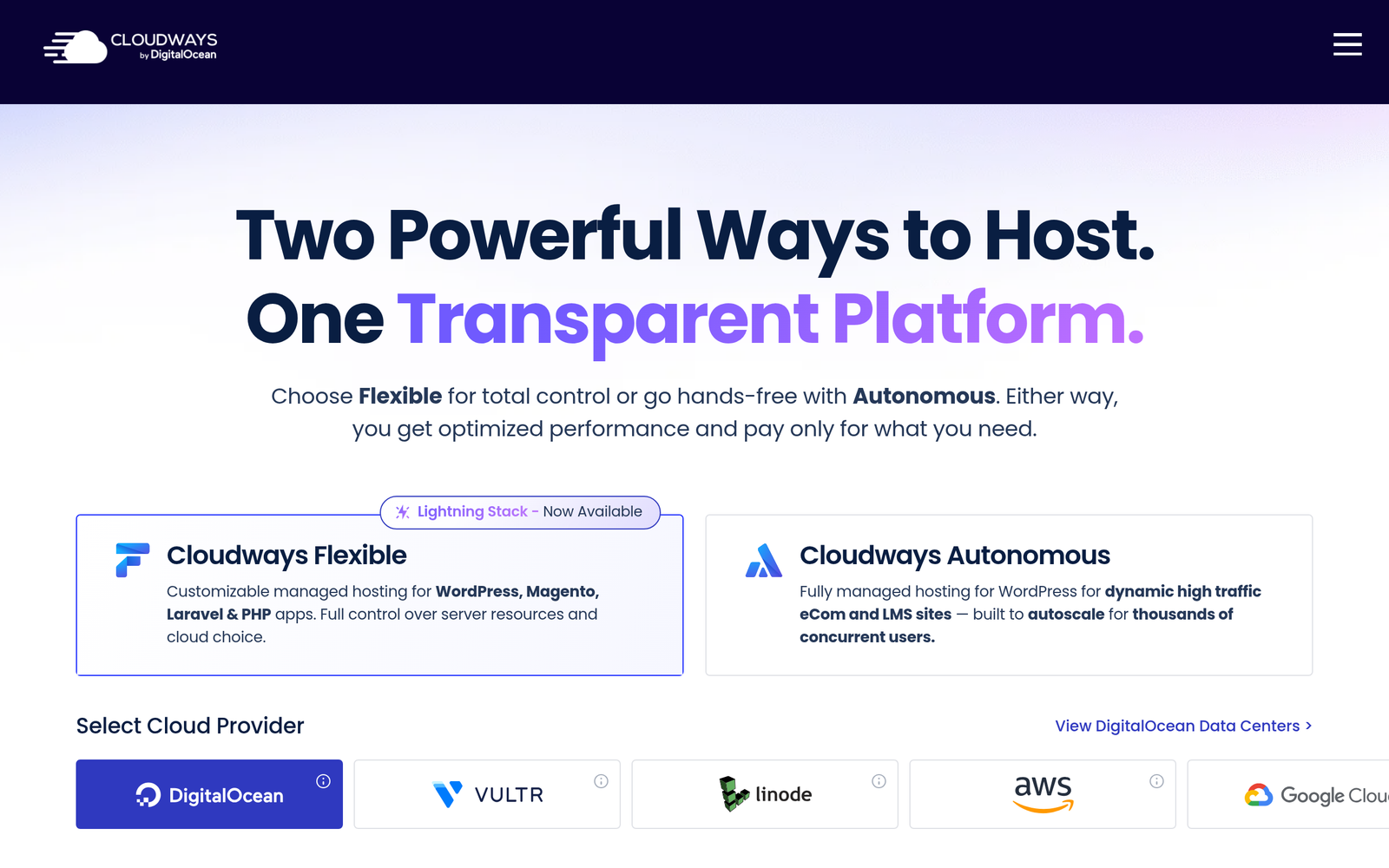

What Cloudways Actually Is
Cloudways is a managed cloud hosting platform.
Note: For most UK businesses spending under £50 per month on hosting, Cloudways is overkill. Shared hosting from Hostinger or SiteGround handles up to 50,000 monthly visitors comfortably. Only move to managed cloud when shared hosting causes measurable problems.
It sits between:
Budget shared hosting
Full enterprise infrastructure
Instead of owning data centres, Cloudways lets you deploy on:
DigitalOcean
AWS
Google Cloud
Vultr
Linode
Cloudways manages the stack.
You control the server choice.
It is built for:
WordPress sites
E-commerce stores
Agencies
High-traffic content sites
It targets businesses that want performance without becoming sysadmins.
Note: If your website loads in under 3 seconds on mobile, your hosting is fine. Use Google PageSpeed Insights to check. Upgrading hosting when your real problem is unoptimised images or bloated plugins is a common and expensive mistake.
Where Cloudways Is Strong
1. Performance Without Server Management
Cloudways includes:
Optimised server stack (Nginx, Apache, Redis options)
Built-in caching
CDN integration
One-click scaling
Compared to shared hosting, performance is noticeably stronger.
Speed affects:
Conversion rate
SEO
Paid ad efficiency
Infrastructure is marketing leverage.
2. Managed Convenience
Cloud hosting normally requires:
Server configuration
Security setup
Maintenance
Cloudways abstracts this.
You get:
Managed updates
Backups
Monitoring
Security patching
Without direct infrastructure complexity.
This reduces technical friction.
3. Scalability
Traffic spike?
Scale vertically.
Need staging?
One-click staging environment.
Launching multiple client sites?
Separate app environments.
For agencies and growing UK businesses, this flexibility matters.
Pricing (UK Context)
Cloudways pricing depends on:
Cloud provider
Server size
Bandwidth
Indicative monthly ranges:
| Provider | Entry Cost (Approx) |
|---|---|
| DigitalOcean | £10–£15 |
| Vultr | £12–£18 |
| AWS | Higher tier |
| Google Cloud | Higher tier |
Model expected traffic before choosing the provider tier.
Cloudways in Practice: A UK Service Business Example
A Manchester-based consultancy runs:
Google Ads
SEO landing pages
CRM integrations
They were on £4/month shared hosting.
Site speed: slow.
Landing pages lagging.
Core Web Vitals are failing.
Ad costs are rising.
They move to Cloudways.
Performance improves.
Bounce rate drops.
Conversion rate increases slightly.
They did not change ads.
They changed the infrastructure.
That small conversion lift covers the hosting cost difference many times over.
Hosting is not an expense.
It is a performance multiplier.
What It Does Not Do
Cloudways does not:
Fix poor website design
Improve bad copy
Solve weak positioning
Replace technical SEO
It improves speed and stability.
It does not fix strategy.
The Honest Caveat
Cloudways is not the cheapest option.
If your website:
Has minimal traffic
Is purely brochure
Does not drive revenue
Shared hosting may be sufficient.
Overengineering early wastes money.
Where It Can Be Risky
1. Overkill for Early Stage
If you are validating an idea, high-tier hosting may not be needed.
Match infrastructure to revenue stage.
2. Misconfigured Scaling
Cloud flexibility can tempt over-scaling.
Monitor usage.
Do not upgrade emotionally.
3. Technical Assumptions
Cloudways simplifies infrastructure.
It does not remove the need for:
Proper caching setup
Security configuration
Backups verification
Managed does not mean automatic perfection.
Cloudways vs Alternatives
vs Shared Hosting (Hostinger, Namecheap)
Shared hosting:
Cheaper.
Lower performance ceiling.
Cloudways:
Higher performance.
More control.
Better for traffic growth.
vs Managed WordPress Hosts
Managed hosts:
Higher price.
Tighter environment control.
Cloudways:
More flexibility.
Choice of cloud provider.
Agency-friendly.
Who Should Use Cloudways
Good Fit
- Growing UK service businesses
- E-commerce stores
- Agencies managing client sites
- SEO-led businesses
- Paid traffic operators
Not the Right Fit
- Micro sites
- Low-traffic blogs
- Very early-stage experiments
Slow hosting increases:
Ad cost per conversion
Bounce rate
Lost enquiries
The cheapest hosting is often the most expensive long-term.
Infrastructure affects marketing ROI.
The Whito View
Whito Takeaway
Cloudways gives you:
Managed performance
Cloud flexibility
Scalable infrastructure
It is not overpriced convenience.
It is managed leverage.
But leverage only works if the rest of your structure is strong.
Fix positioning.
Fix conversion.
Then upgrade the infrastructure.
Structure before scale.
Cloudways: Common Questions Before You Subscribe
Is Cloudways good for UK businesses?
Yes, especially if your website generates leads or sales. Performance improvements often justify the cost difference versus shared hosting.
Is it better than shared hosting?
For performance and scalability, yes. For ultra-low budget projects, shared hosting may be sufficient.
Do I need technical knowledge?
Basic understanding helps, but Cloudways removes most server-level complexity.
Is Cloudways worth it for SEO?
Speed influences Core Web Vitals and user behaviour, both of which affect SEO performance. Hosting alone does not rank you, but slow hosting can suppress growth.
Want a full marketing audit?
The Deep Audit reviews your entire marketing setup and gives you a prioritised action plan with UK cost benchmarks. One-off fee. Money-back guarantee.
Get Your Deep Audit